
How to Check for a Warrant in Hawaiʻi
Every Hawaiʻi warrant question begins with the paper trail. Pull the case papers or the public case information first, then take them straight to the court that issued the order. The statewide Judiciary does run an electronic warrant service, but only approved justice agencies can use it. Everyone else reviews whatever case activity is available online and then asks the issuing clerk to confirm the current warrant status. Hawaiʻi keeps its police work at the county level. There are four county police departments, yet no separate county sheriff office listed in each directory entry. The court structure is simple too. No city, municipal, or justice-of-the-peace tier exists. So pick the route that matches the case. Assuming every warrant shows up in one convenient list is the fastest way to miss the one that matters.
- Gather the citation, summons, case number, or court notice. In a Hawaiʻi matter, it can identify the court division and circuit tied to the case.
- Search Hawaiʻi public case information by party or case details when available. Treat a match as a lead, not as final proof of an active warrant.
- Contact the Hawaiʻi issuing court's clerk. Ask whether the warrant remains active, what bail or conditions apply, and what step the court requires.
- For a Hawaiʻi traffic or ordinance case, check the relevant District Court division. A civil ticket default and a criminal failure to appear follow different paths.
- Use the county directory to find the correct Hawaiʻi circuit and local police route. For a federal matter, contact the federal court or counsel instead of relying on a state case search.
Warrant records in Hawaiʻi sit in different systems. Courts and law enforcement hold them under separate access rules. When an online search comes back empty, ask the court where the case was filed. A blank result is not clearance.
Hawaiʻi Warrant Search in eCourt Kōkua
eCourt Kōkua is the public case-information portal run by the Hawaiʻi Judiciary. It can help you find an open case or a docket event. What it is not: a warrant-only search, or a mirror of every record sitting in a courthouse. The Judiciary posts case information for traffic, District, Circuit, Family, and appellate courts, plus Land Court and Tax Appeal Court. A case page might display events or bail details. Still, the clerk of court remains the right source for current warrant status. The public side of the Hawaiʻi portal offers several search modes. Their required fields differ, and none of them carries a warrant-status filter. Treat these as Hawaiʻi case searches rather than a statewide warrant database.
| Search mode | Documented inputs | What it does not confirm |
|---|---|---|
| Party | For a person, first and last name are required; middle name, partial or phonetic matching, date range, and case type may refine the search. | That a name match is the same person or that a warrant is currently active. |
| Vehicle | License plate and state, or a vehicle identification number, with case filters. | Who owns a vehicle or whether a person has a warrant. |
| Case | Case ID is required; the manual also documents application, arrest, TCT, OTN, SID, and filing-date fields. | A warrant-only result or a public eBench record. |
| Filing date | Court type, court, location, room or division, case type, and a date range up to 60 days. | A complete export of every docket or warrant. |
| Upcoming hearings | Case ID or court and location, with island, division, and date or time options. | Whether a hearing list contains every warrant event. |
The Judiciary's eCourt Kōkua availability page lays out what public case access includes and where it stops. It documents a case-information route, not a public warrant roster.
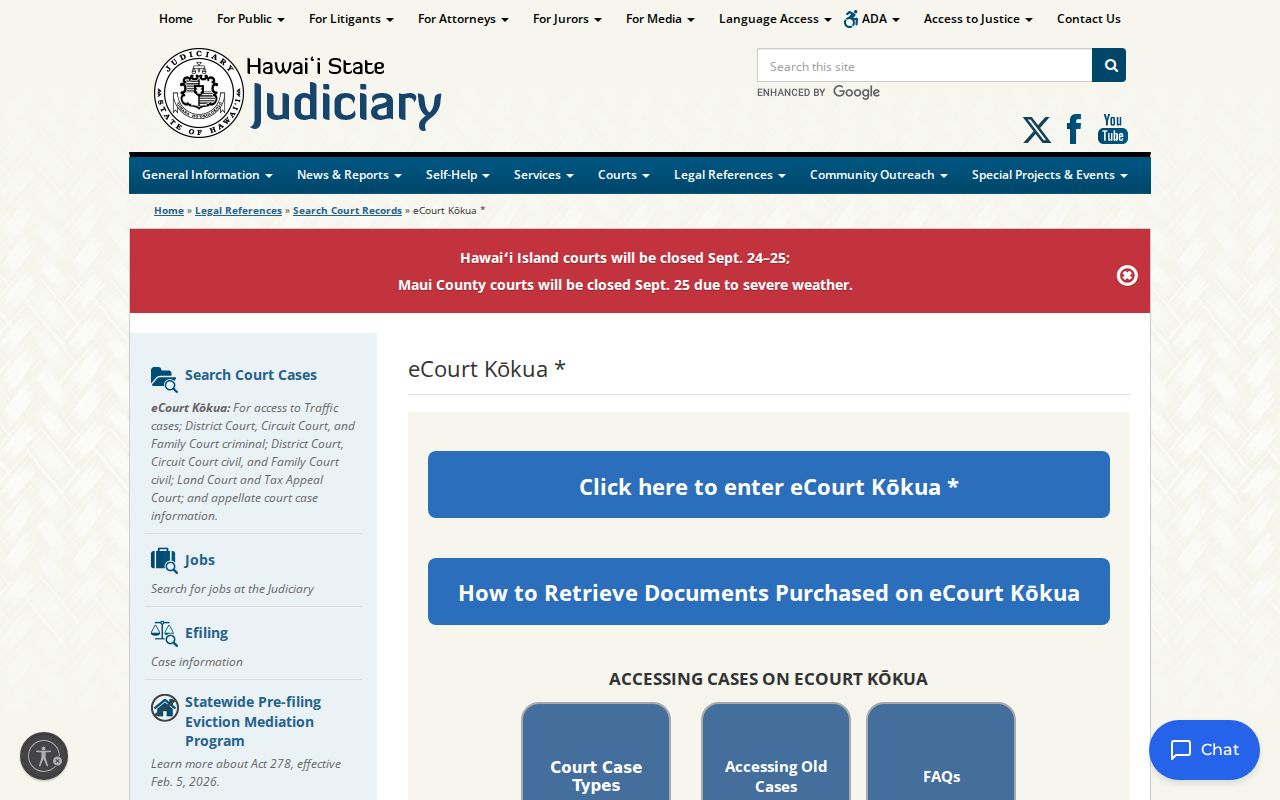
Online Hawaiʻi case records can be incomplete or simply unavailable. Some portal pages also require CAPTCHA. If your case search returns no match, ask the issuing clerk whether another search or a courthouse request is the next step.
The Hawaiʻi Statewide Warrant System
Hawaiʻi Judiciary eBench Warrants is the statewide electronic warrant service. Its public landing page describes a system built for approved law-enforcement and criminal-justice agencies, each signing in through an authenticated account. The published scope covers traffic, criminal, and non-Family Court civil warrants, with information refreshed multiple times daily. Ordinary users cannot create a regular account or view the search fields, the roster of participating agencies, or any result limits. eBench belongs to the Hawaiʻi Judiciary, not the Department of Law Enforcement. The DLE Sheriff Division serves warrants and court process statewide, while the Hawaiʻi court on the case keeps control of any recall. For the public, the practical alternative is an available case docket plus confirmation from the issuing court. A fuller account of Hawaiʻi's system, its court-to-agency flow, and its federal boundaries sits in the Warrant System reference. One wrinkle deserves honesty. A Judiciary fiscal-year report describes electronic warrant delivery across District, Family, and Circuit Court matters, yet the public landing page excludes Family Court civil warrants from eBench's scope. Those two statements do not agree on whether Family Court civil matters are searchable there. Hawaiʻi coverage should carry that limit openly rather than promise access to every outstanding warrant. In the end, the statewide system is an agency service layer, not the public record itself. Anyone with a personal Hawaiʻi case still needs the issuing court and the right county route to confirm or address it.
Four Circuits Route Hawaiʻi Warrant Records
Hawaiʻi runs one State Judiciary split into four active circuits. Hawaiʻi District Court takes traffic, state and county ordinance matters, many misdemeanors, and felony preliminary proceedings. Hawaiʻi Circuit Court is the general-jurisdiction trial court, felony cases included. Hawaiʻi Family Court works as a Judiciary division in each circuit and carries extra privacy limits. Appellate courts review cases rather than serving as the routine starting point for Hawaiʻi trial-level warrants.
| Directory area | Judicial route | Local distinction |
|---|---|---|
| City and County of Honolulu | First Circuit | Oʻahu cases route to the court division tied to the case type. |
| Hawaiʻi County | Third Circuit | Hilo and Kona are District Court locations within the island circuit. |
| Maui County and Kalawao | Second Circuit | Kalawao is a separate directory entry, but not a separate police department or circuit. |
| Kauaʻi County | Fifth Circuit | The Judiciary circuit includes Kauaʻi and Niʻihau. |
The Hawaiʻi Judiciary's Circuit Court information separates statewide court divisions from county directory labels. A Hawaiʻi warrant question follows the court and case, never just the county name.
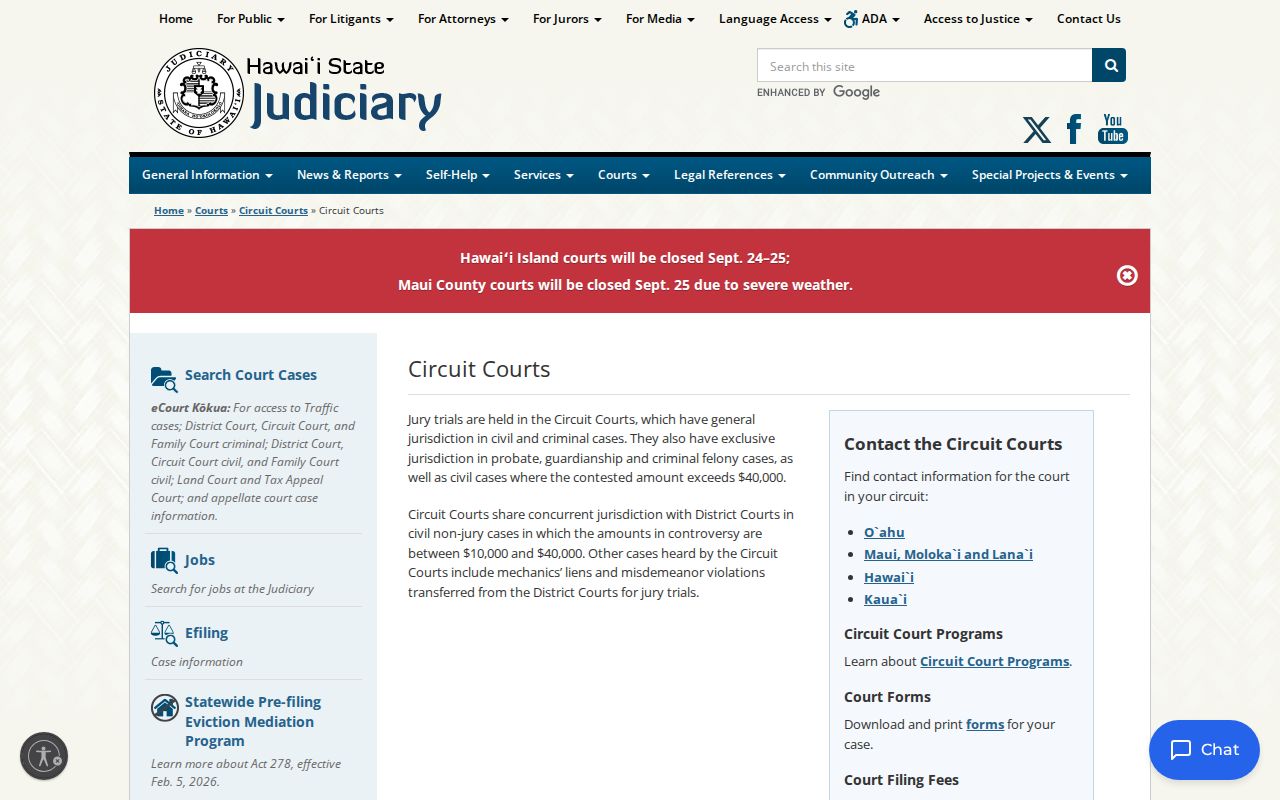
Hawaiʻi runs its warrant records through four judicial circuits. Each circuit covers the county jurisdictions that operate day to day. The Hawaiʻi project directory also lists Kalawao separately, but that entry is not a warrant route.
Types of Warrants in Hawaiʻi
Hawaiʻi courts issue several distinct orders. An arrest warrant follows a judge's probable-cause finding. A bench warrant grows out of a pending case, usually after a missed required appearance or an order that went unheeded. A search warrant authorizes a search, not mainly an arrest of the person named. Federal warrants run through a separate federal case.
| Record or order | How it arises | Hawaiʻi issuing authority |
|---|---|---|
| Arrest warrant | A judge authorizes arrest after the required probable-cause process. | State trial court with jurisdiction over the case. |
| Bench warrant | A judge responds to a missed appearance or failure to comply in a pending matter. | District, Circuit, or Family Court as the case requires. |
| Search warrant | A judge authorizes a search or seizure under the applicable rule and statute. | Judge with authority over the application. |
| Civil traffic default | A missed response can lead to default judgment and a driver-license stopper. | District Court; the stopper is not itself a warrant. |
| Federal warrant | A federal criminal case follows federal procedure. | U.S. District Court for the District of Hawaiʻi. |
Not every Hawaiʻi order carries the same label. Hawaiʻi court rules use “bench warrant,” and the state sets no statewide capias pro fine term. What matters is the label on the actual Hawaiʻi order plus the case type behind it. A civil Hawaiʻi bench-warrant form is a poor model for a criminal or traffic warrant.
Hawaiʻi Traffic Stopper Versus Warrant
A Hawaiʻi driver-license stopper is not an arrest warrant. It is a court-related restriction tied to certain unpaid civil traffic defaults, and it can block issuance or renewal of a Hawaiʻi license. It will not appear as a public Hawaiʻi warrant-search result. A required appearance in a traffic-crime case is a different matter. Miss that court date and a District Court bench warrant may follow. A late Hawaiʻi civil ticket payment alone does not automatically become an arrest warrant. Timing matters, though. The Hawaiʻi Judiciary says a citation generally must be answered or paid within 21 days. If a Hawaiʻi civil default judgment sits unpaid for 30 days, a stopper may follow. Judgments of $500 or less are referred to collection after 90 days; amounts over $500 after 180 days. Once a collection agency holds the case, payment goes to that agency, fees included, rather than to the Hawaiʻi court. The Judiciary explains how a driver-license stopper is cleared. That official page walks through the civil traffic process; it is not a warrant listing.
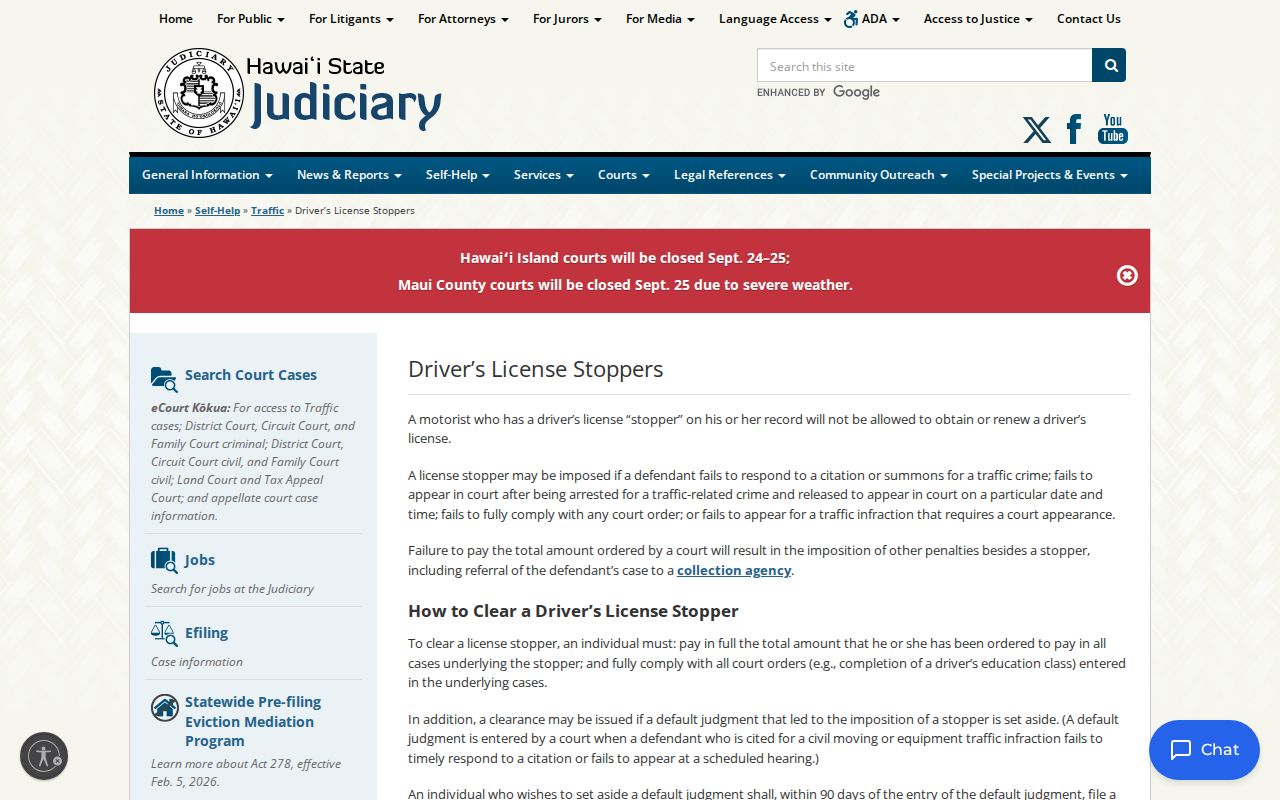
Eligible Hawaiʻi cases have a civil route. A current motion to set aside default may be paired with a cash appearance bond equal to the amount due. The Hawaiʻi forms and instructions sit with the statewide process on the Traffic Warrant page. The deadline, bond, and result all depend on the case. These civil steps do not recall an unrelated criminal warrant. Hawaiʻi has no separate public statewide stopper lookup. eTraffic takes payment on certain recent Hawaiʻi citations, but it does not check warrants. It also will not resolve every Hawaiʻi default. The relevant Hawaiʻi District Court can confirm the case path.
What a Hawaiʻi Warrant Record Shows
Hawaiʻi publishes no public eBench result screen. There is no statewide warrant-number format either. A blank Fifth Circuit civil bench-warrant form shows a few court-process fields, but it is not a sample criminal warrant and does not define the eBench record. Public eCourt case details can include a case number, court, parties, case status, docket events, offenses, and bail or bond information. Those are case-file details. They do not prove a warrant remains active.
| Hawaiʻi warrant number | The public sources reviewed do not establish a Hawaiʻi statewide numbering pattern or an eBench number field. |
|---|---|
| Hawaiʻi person or party | A Hawaiʻi court record may identify parties; a name match still needs identity confirmation. |
| Hawaiʻi offense or basis | For a Hawaiʻi criminal arrest warrant, the order identifies the offense; a bench warrant relates to a pending case or missed duty. |
| Issuing court | The court and division responsible for the case determine the record route and control recall. |
| Bail and conditions | These depend on the specific order. The possible bench-warrant assessment is separate from bail. |
| Status and service | Docket events may show ordered, created, served, returned, rescheduled, or recalled activity; ask the clerk for current status. |
Docket codes are event labels in Hawaiʻi eCourt, not public eBench warrant-status filters. One example is MRBW. That code marks a motion to recall a Hawaiʻi bench warrant. A filed motion does not itself prove the court granted recall.
- Bench warrant
- A judge's warrant in a pending case, often tied to a missed court appearance or failure to comply.
- Recall
- A court action withdrawing a warrant; confirm that the order was entered in the case.
- Driver-license stopper
- A traffic-related restriction on license issuance or renewal, not an arrest warrant.
- Issuing court
- The court that made the order and can provide the official next step.
Clear a Hawaiʻi Warrant Through Court
When a Hawaiʻi case seems to involve a warrant, identify the Hawaiʻi issuing court and the case type first. A docket code only points to an event. Only the court can tell you whether the Hawaiʻi warrant is active, recalled, or awaiting action. A blank portal result settles nothing. Contact the clerk for the relevant Hawaiʻi District, Circuit, or Family Court division instead. The directory below maps project areas to Hawaiʻi circuits, and the State Judiciary court pages identify the division handling the case. Then ask the right questions. Is there a current Hawaiʻi warrant? What bail or conditions apply? Is a motion or new appearance required, and how does the court record a recall? Hawaiʻi's eCourt code list uses MRBW for “Motion to Recall Bench Warrant,” yet the state publishes no single public recall form covering every Hawaiʻi criminal warrant. Never substitute a civil Hawaiʻi form for a case-specific criminal filing.
For a Hawaiʻi arrest warrant or a criminal bench warrant, a Hawaiʻi attorney or the public defender eligibility office can explain the options. Do not count on an unannounced courthouse visit to prevent arrest or guarantee release. The judge, the order, the bail terms, and the case facts control. Keep your filed paperwork. Ask the clerk how to confirm the Hawaiʻi court and service records were updated. Hawaiʻi eBench updates multiple times daily. That schedule is not a promise of immediate removal after a court action. A Hawaiʻi family member helping with a case should use the same official route rather than trust an old online result.
Public Access to Hawaiʻi Warrant Records
Hawaiʻi opens government records through two doors. Agency records follow UIPA, HRS Chapter 92F. Court files answer to the Hawaiʻi Court Records Rules and any statute or court order that applies. The two channels are related but not interchangeable. A request under the Uniform Information Practices Act to the Hawaiʻi Department of Law Enforcement reaches agency records only. It cannot force the Judiciary to disclose a sealed or confidential court record. Access still depends on the record and the case. The online eCourt pages do not show every public record held at a Hawaiʻi courthouse. Some material must be viewed or copied in person. Sealed, confidential, and juvenile information carries stricter limits. Certified copies come from the Hawaiʻi Judiciary through the courthouse that keeps the case.
Hawaiʻi access rules:
Hawaiʻi HRS Chapter 92F governs access to state agency records and recognizes withholding exceptions.
The Hawaiʻi Court Records Rules, including Hawaiʻi Rules 2.9 and 10.4, address confidential records and who may access them.
HRS §607-8.5 allows a court to assess up to $50 for certain bench warrants after failure to appear or comply; it is not a bail schedule.
The Hawaiʻi Department of Law Enforcement posts a UIPA records-request page. The instructions there cover agency files, not a Hawaiʻi warrant or court-file search.
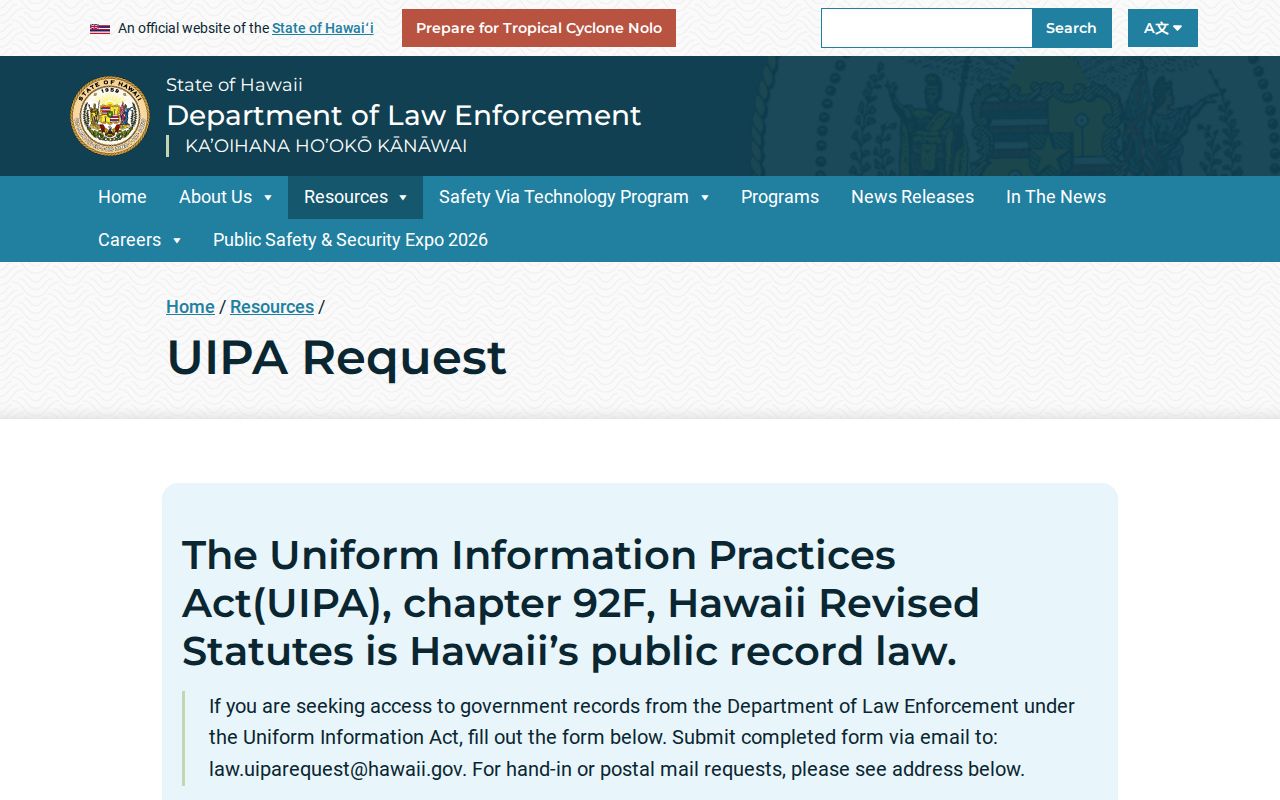
Use that route for records the agency keeps. Hawaiʻi court files follow the Judiciary's own records rules. Protected Hawaiʻi court material stays under court limits. Never post private identifiers from a Hawaiʻi warrant or docket. A public case entry is only a lead; warrant status still needs the Hawaiʻi court with authority over the case.
Hawaiʻi Warrants and Community Outreach
Hawaiʻi's Community Outreach Court is a limited Oʻahu District Court program. It is not a statewide amnesty. Nor is it a blanket Hawaiʻi warrant-clearance service. The program serves people experiencing homelessness or at risk of it, and only eligible qualifying matters get in. Referral runs through a Public Defender case coordinator, and participation is voluntary. Other eligibility conditions apply. Some Hawaiʻi traffic matters and license stoppers may qualify. Still, a past clinic or program listing does not promise a particular warrant can be recalled, so confirm with the Hawaiʻi court. The Judiciary's Community Outreach Court information page explains the program's scope and referral route.
The Hawaiʻi Judiciary also held dated Oʻahu warrant-recall clinics in 2024 and 2025. Those were local events. They helped eligible people with specified motions and hearing dates, not a statewide Hawaiʻi warrant amnesty. For a Hawaiʻi case, ask the issuing court. Ask about its current process and whether counsel is available.
Find Warrants by County in Hawaiʻi
Hawaiʻi's county directory holds five folders, including Kalawao. They route to four active judicial circuits and four county police departments. Those counts are not the same thing. A directory entry can point you to the likely circuit and local Hawaiʻi police office. The case and warrant stay with the issuing court. Hawaiʻi has no separate sheriff office in each directory area, so a county link is not a county-court or county-sheriff system.
City and County of Honolulu
Honolulu · Oʻahu's First Circuit and largest county population.
Hawaiʻi County
Hilo · Third Circuit, with Hilo and Kona District Court locations.
Maui County
Wailuku · Second Circuit includes Maui, Molokaʻi, Lānaʻi, and Kalawao.
Kauaʻi County
Līhuʻe · Fifth Circuit includes Kauaʻi and Niʻihau.
Kalawao County
Kalaupapa · Court and police routing is through Second Circuit and Maui arrangements.
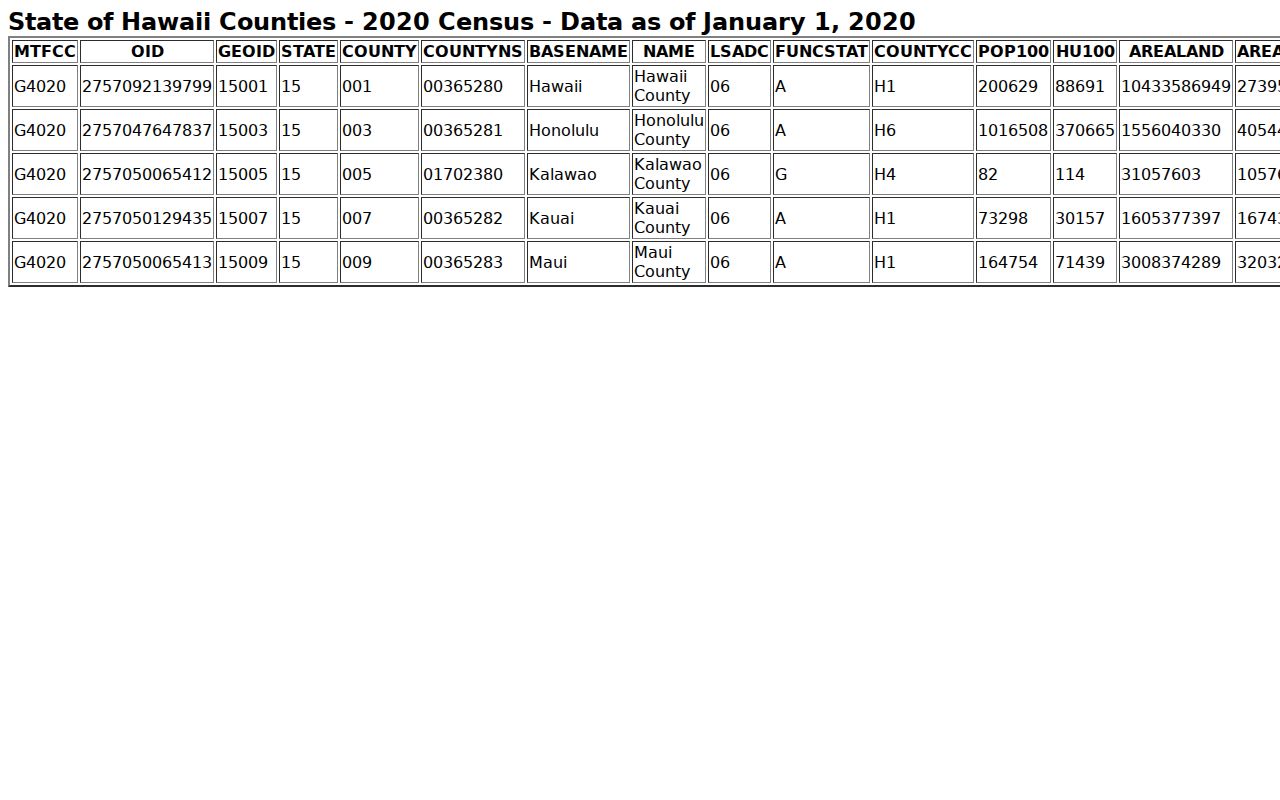
For county population context, the U.S. Census Bureau county table lists the five Hawaiʻi county entries. That table is population reference material, not warrant data.
Ready to pick a starting point? Open the full directory of all five Hawaiʻi county routes and choose the right court or police office for a Hawaiʻi warrant question.
DLE Serves Hawaiʻi Court Warrants
The Hawaiʻi Department of Law Enforcement opened its doors on January 1, 2024. It grew out of Act 278, Session Laws of Hawaiʻi 2022. That law reorganized state law-enforcement functions. The Hawaiʻi DLE Sheriff Division now serves Hawaiʻi arrest warrants and other court documents across the state. It also guards courthouses, transports people between islands, and coordinates with county and federal agencies. That statewide Hawaiʻi service role is distinct from the Judiciary's ownership of eBench and eCourt Kōkua. The division lists a main number of (808) 587-5002. That number is not a public warrant-status hotline. County police departments are separate local Hawaiʻi agencies. Their records desks and arrest channels serve different purposes, and no single open roster lists every Hawaiʻi warrant statewide.
Hawaiʻi Department of Law Enforcement, Sheriff Division
Statewide court-process service, warrant execution, courthouse support, and interagency coordination.
(808) 587-5002
For a personal Hawaiʻi warrant question, the issuing clerk is the route. Ask that clerk for status and next steps. Use the county directory to spot the right Hawaiʻi court circuit or local police route when a case record points there.
Hawaiʻi eBench Warrant History
Hawaiʻi moved its warrant paperwork online earlier than most states. The Hawaiʻi Judiciary launched eBench in March 2009, giving authorized law-enforcement users an electronic way to run a warrant search on traffic warrants outside ordinary business hours. That first phase fell short of full statewide implementation, though. Later Judiciary submissions spread the expansion over several years, so one launch date never marks the moment every agency or warrant type came online. A 2009 announcement described the initial project in those terms. Today the public-facing material says eBench refreshes multiple times daily, and Judiciary reporting describes some traffic warrant data moving several times each day within 24 hours. None of that promises your specific Hawaiʻi case updates the instant a judge acts. Public access grew on a separate track. eCourt Kōkua serves as the public Hawaiʻi case-information service, while eTraffic Hawaiʻi takes eligible citation payments. Keeping those Hawaiʻi functions apart matters. A docket screen or a payment confirmation is not a statewide warrant check, and treating one as such leads people astray. The warrant side stays with law enforcement; the public side shows case records and fines. Knowing which tool answers which question saves a wasted trip through the wrong portal. Each Hawaiʻi service has its job, and none of them replaces a call to the court that issued the order.
Federal Warrants in Hawaiʻi
A federal warrant is not a Hawaiʻi Judiciary matter. It belongs to a federal case, handled through channels separate from the state courts. The U.S. District Court for the District of Hawaiʻi issues federal orders, and the U.S. Marshals Service handles service across the islands. Filed federal docket material may sit in PACER. A sealed or pre-filing warrant can stay out of any public docket, though. So a Hawaiʻi state case search cannot settle a question about federal process. Run the right search in the right system. The Marshals describe a Hawaiʻi Fugitive Task Force that pools federal, state, and local resources. Its published Hawaiʻi program and tip information exist for reporting something to law enforcement. They are not for checking your own warrant status. The District of Hawaiʻi Marshals page maps the federal layer, but it is no stand-in for a complete Hawaiʻi state warrant list. For an identified federal case in Hawaiʻi, ask the federal clerk or a qualified attorney about the court record and the next step. For a state matter, start with the Hawaiʻi issuing court and its circuit. One Hawaiʻi record can involve more than one agency. Confirm which court issued each order before trusting an online result.