
Traffic Warrants in Hawaiʻi
In Hawaiʻi, “traffic” means two kinds of cases. Keep them straight. A civil infraction is a court matter with a response deadline. A traffic-crime case can require an appearance. Miss it, and the judge may issue a bench warrant. A late civil ticket in Hawaiʻi does not turn into an arrest warrant on its own. The case type, the citation, and any court order control what follows, so the paper ticket alone proves nothing about warrant status. Hawaiʻi runs no city, municipal, or justice-of-the-peace court tier. District Court handles traffic and ordinance matters statewide, with Traffic Violations Bureau functions for traffic cases. The Hawaiʻi Judiciary keeps the docket rather than a separate county court system. County police may write the citation. The court controls the case and any resulting order. With a family member’s notice, start by finding its court and what it demands: payment, a written response, or an appearance. Only that Hawaiʻi court can confirm warrant status. The Judiciary’s District Courts page lays out traffic jurisdiction and island court locations across Hawaiʻi; it helps you route a question to the right place, but it does not run a warrant search.
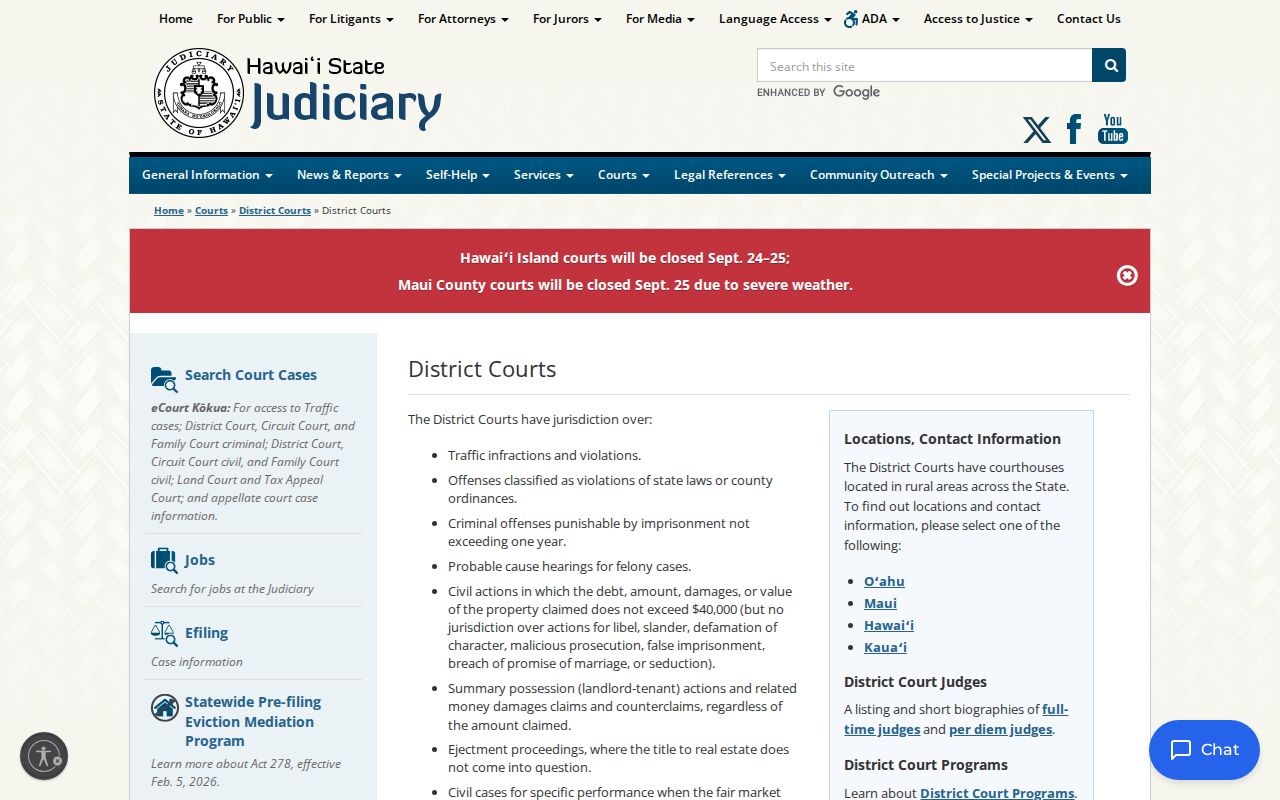
This court information helps locate the right Hawaiʻi division for a citation. It lists no individual warrant and confirms no order.
Hawaiʻi Traffic Crime FTA vs Civil Default
The real dividing line in Hawaiʻi is the case type, not simply an overdue payment. Answer or pay late on a civil infraction and the case can reach default judgment under HRS §291D-7. That judgment can bring a license stopper and collection. A crime case moves differently. If the court requires the defendant to appear and the person skips it, the judge may issue a bench warrant under the criminal rules. Different records, different remedies. A civil default is not a criminal warrant entry. For a Hawaiʻi civil ticket, read the citation and any later court notice before assuming a warrant exists. The date to answer or pay is generally 21 days. If an appearance is required, the case is not a routine online payment. An unpaid default in Hawaiʻi can cause real practical trouble. Still, it never converts the civil judgment into an arrest order. The Judiciary’s traffic instructions cover payment limits for Hawaiʻi tickets, while the case court confirms whether a Hawaiʻi warrant was issued. A payment receipt alone settles nothing.
Statewide FTA and License-Hold Systems
Hawaiʻi publishes no public statewide failure-to-appear registry or license-hold lookup, and nothing comparable to a commercial citation index. The Judiciary explains the driver-license “stopper.” It offers no public statewide stopper query. eBench is a different tool entirely. That Hawaiʻi system is a restricted warrant service reserved for approved law-enforcement and criminal-justice users. Keep the services straight. A stopper is not a warrant search. For any one Hawaiʻi case, the court’s order or citation is still the starting point. The state posts no public traffic-warrant roster. Online case information may locate a docket. It is not an official stopper check or a complete warrant confirmation. A licensing restriction can block renewal with no arrest warrant behind it, and a bench warrant is court process that a license-account check never resolves. The Judiciary’s stopper instructions walk through the civil-default path. Ask the issuing Hawaiʻi District Court which record and next step apply, including whether an active warrant is on file. The Judiciary’s driver-license stopper page explains the restriction process, but it is not a warrant-status lookup.
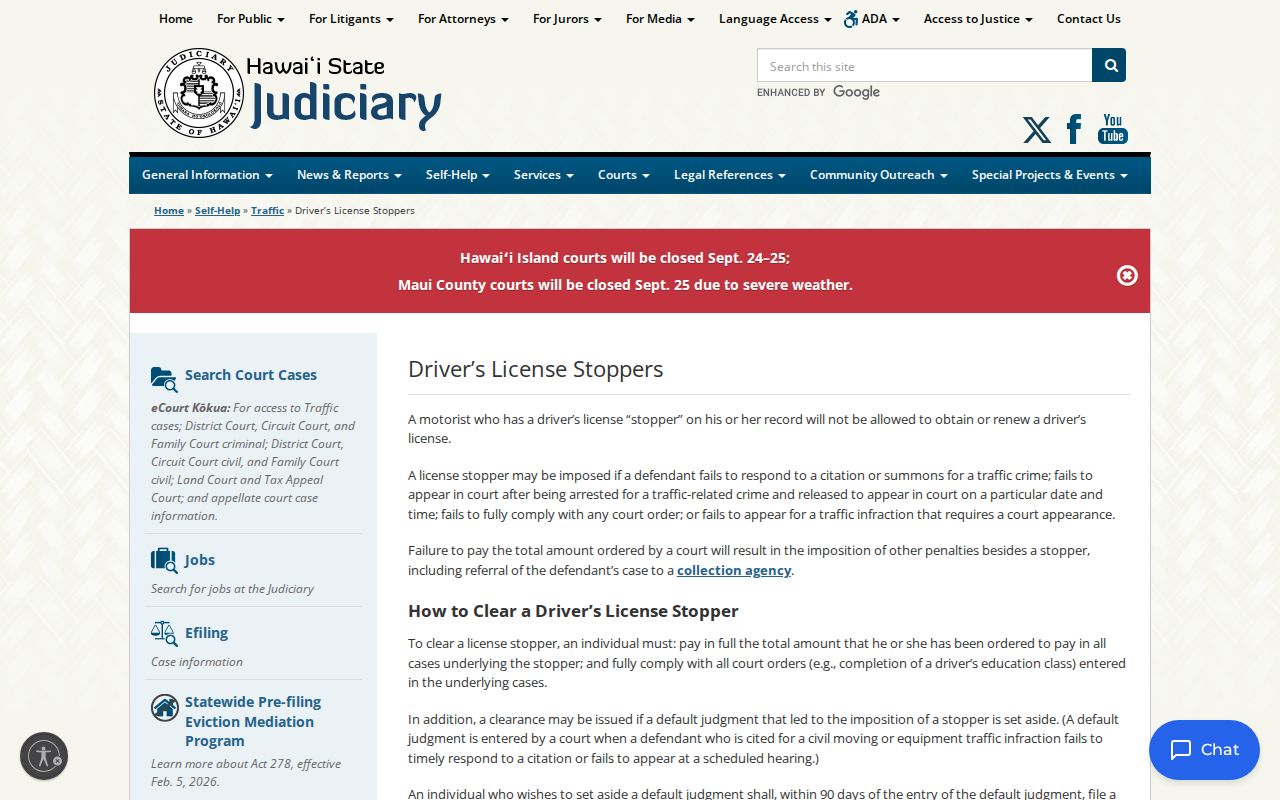
This Hawaiʻi guidance covers license renewal after a civil default; a bench warrant remains a separate question for the issuing court.
| System | What It Holds | Run By |
|---|---|---|
| Driver-license stopper process | Civil traffic default restriction affecting license issuance or renewal; no public lookup found | Hawaiʻi Judiciary and licensing process |
| eBench Warrants | Covered traffic, criminal, and non-Family Court civil warrants for approved users | Hawaiʻi State Judiciary |
| eTraffic Hawaiʻi | Payment for eligible Hawaiʻi citations, not warrant or stopper status | Hawaiʻi Judiciary |
Note: A driver-license stopper in Hawaiʻi can block renewal, but that restriction alone does not show a bench warrant was issued.
Hawaiʻi eTraffic Is Not a Warrant Search
eTraffic Hawaiʻi is the Judiciary's online channel for paying certain civil citations. It works only for tickets that meet its eligibility rules: payable without a Hawaiʻi court appearance and still inside the response period. You enter a Hawaiʻi citation number and pay. That is the whole job of the portal. It will not search a name for a warrant, confirm a stopper, or undo a default judgment already entered. A paid receipt there is not a warrant record either. If the portal has no Hawaiʻi citation for you, the case may simply sit at a stage the system cannot reach, and payment there runs no warrant search at all.
Timing is the most common snag. The Hawaiʻi Judiciary says some tickets take 13 days or longer to appear online. When the portal throws an error, wait 24 hours before trying again so you do not pay twice. eTraffic also cannot handle a required appearance in a Hawaiʻi case, a delinquent citation, a post-hearing balance, a default judgment, or a ticket not yet entered. The official eTraffic guidance spells out these limits. A paid eligible citation and a closed warrant are two different facts in Hawaiʻi. Once a case moves past the portal's allowed stage, contact the Hawaiʻi court named on the citation or judgment. Keep the receipt. Ask the clerk whether the payment covered the whole amount due, whether anything else remains, and whether the court's own record needs updating. If the notice requires an appearance in a Hawaiʻi criminal traffic case, follow the court's instructions instead of forcing the matter through eTraffic, and let the issuing Hawaiʻi court confirm warrant status.
How to Check for a Hawaiʻi Traffic Warrant
Hawaiʻi has no public statewide warrant or stopper search. So a solid Hawaiʻi check begins with the paperwork. Find the Hawaiʻi court that owns the case and work from there. eCourt Kōkua can show available Hawaiʻi case information, though it is not a warrant registry, and an empty docket result does not establish that no Hawaiʻi order exists. The issuing Hawaiʻi clerk is the source that can confirm present warrant status and tell you what must happen next. For a Hawaiʻi traffic citation, or a notice about a missed date, that phone call or counter visit is the real warrant check, and it beats guessing from any online screen. If the citation came from a police officer, the agency can say where the case was filed, but only the court's word counts on status.
- Read the Hawaiʻi citation, summons, or judgment for the court, case number, response deadline, and any required appearance or warrant notice.
- Use public Hawaiʻi eCourt Kōkua case information only as a lead to locate an available Hawaiʻi docket, not as a final warrant-record result.
- Open the relevant county route in the county directory to find the Judiciary circuit and local police context.
- Contact the issuing Hawaiʻi District Court clerk to ask whether a bench warrant exists, whether a Hawaiʻi civil default or stopper remains, and which filing or appearance is required.
The issuing agency is a starting point, not the answer. If a Hawaiʻi officer wrote the citation, that agency may explain where it was filed, but its word does not replace the Hawaiʻi court's status confirmation. In a Hawaiʻi traffic-crime matter, ask directly about the required court date and any warrant entry. For a Hawaiʻi civil default, ask about the judgment, the total due, and the stopper. One line you should not call: a Hawaiʻi Crime Stoppers number or any law-enforcement tip line is for reporting crime, not for checking your own case. A public case search can locate a docket, but the issuing Hawaiʻi court alone controls warrant status, so treat the clerk's answer as the one that matters.
Hawaiʻi Traffic Warrant Deadlines and Posting Delays
Timing drives everything in a Hawaiʻi traffic case. The paper citation does not hit the online payment system right away. Hawaiʻi eTraffic can take 13 days or more to show a ticket. The Hawaiʻi Judiciary generally allows 21 days to answer or pay a civil citation, and eTraffic only accepts certain citations inside that window. So a blank search means little. It is not a Hawaiʻi court finding that the ticket or case is void, and it says nothing about warrant status. Call the traffic clerk before assuming you are clear.
A Hawaiʻi civil default judgment carries its own schedule once it goes unpaid. After 30 days, a driver-license stopper attaches under Hawaiʻi Judiciary instructions. Collection referrals then run on a separate clock. Judgments of $500 or less get referred after 90 days. Judgments over $500 get referred after 180 days. None of those Hawaiʻi dates creates an arrest warrant. They mark default and collection consequences only. Keep the citation and every notice you received, write down when you responded, and ask the Hawaiʻi court or the collection agency which stage applies now. The default record and the warrant record stay separate. If Hawaiʻi eTraffic throws an error, the Judiciary advises waiting 24 hours before retrying, which cuts the risk of a duplicate payment. Save any receipt that helps explain what happened. When a payment fails to post or the case has gone to default, verify the Hawaiʻi court docket directly. A required appearance in a Hawaiʻi traffic-crime case is a separate duty. The 21-day civil response period never excuses a criminal court date on a summons or later order. Ask that court whether a bench-warrant entry exists.
Paying or Lifting a Traffic Warrant
In Hawaiʻi, paying a ticket and lifting a warrant are two different jobs. A civil default can be paid or challenged under the court's own instructions. A bench warrant in a Hawaiʻi traffic-crime case is another matter. It runs through the issuing court's process instead. So confirm the case type first. Also confirm the current amount, the payment destination, and whether a Hawaiʻi court appearance is required before any money moves or travel plans form. A Hawaiʻi payment portal cannot recall a criminal warrant by itself; warrant-status questions go to the court. For a civil default judgment with a stopper, the Hawaiʻi Judiciary's current set-aside materials use forms 1D-P-1191 through 1D-P-1193. Timing shapes the filing. A motion filed within 90 days must generally explain good cause. After 90 days, the person has to explain exceptional circumstances and the delay itself. The Hawaiʻi cash appearance bond is case-specific and equals the amount due under the judgment. It is neither a fixed warrant fee nor a criminal bail schedule. The Hawaiʻi court decides the motion. That ruling controls what happens to the bond. Work through the court's steps in Hawaiʻi rather than assuming one remedy fits every citation you find in a Hawaiʻi warrant search.
- Ask the issuing Hawaiʻi District Court whether the matter is a civil default, a required-appearance traffic crime, or both a case and a separate warrant record.
- For an eligible civil default, obtain the current forms and instructions from the Judiciary’s traffic forms page.
- Pay the amount due to the Hawaiʻi court or file the motion and post the required cash appearance bond as directed.
- Confirm the motion’s outcome, any new Hawaiʻi hearing date, and whether the court has updated the stopper or warrant record.
Caution: A civil traffic stopper is not an arrest warrant, and posting a set-aside bond does not recall a separate criminal bench warrant.
Hawaiʻi Traffic Default Set-Aside Motion
A Hawaiʻi civil traffic citation that has reached default judgment can be reopened through a motion to set aside, paired with a cash appearance bond. The Hawaiʻi Judiciary lays out that route. It asks the court to revisit the civil result. That is its only job. It does not erase every Hawaiʻi traffic entry, and it does not resolve a criminal warrant. The forms index groups the motion, its instructions, and the bond paperwork together as forms 1D-P-1191 to 1D-P-1193. The current Judiciary traffic forms page posts the motion and bond materials a Hawaiʻi filer needs.
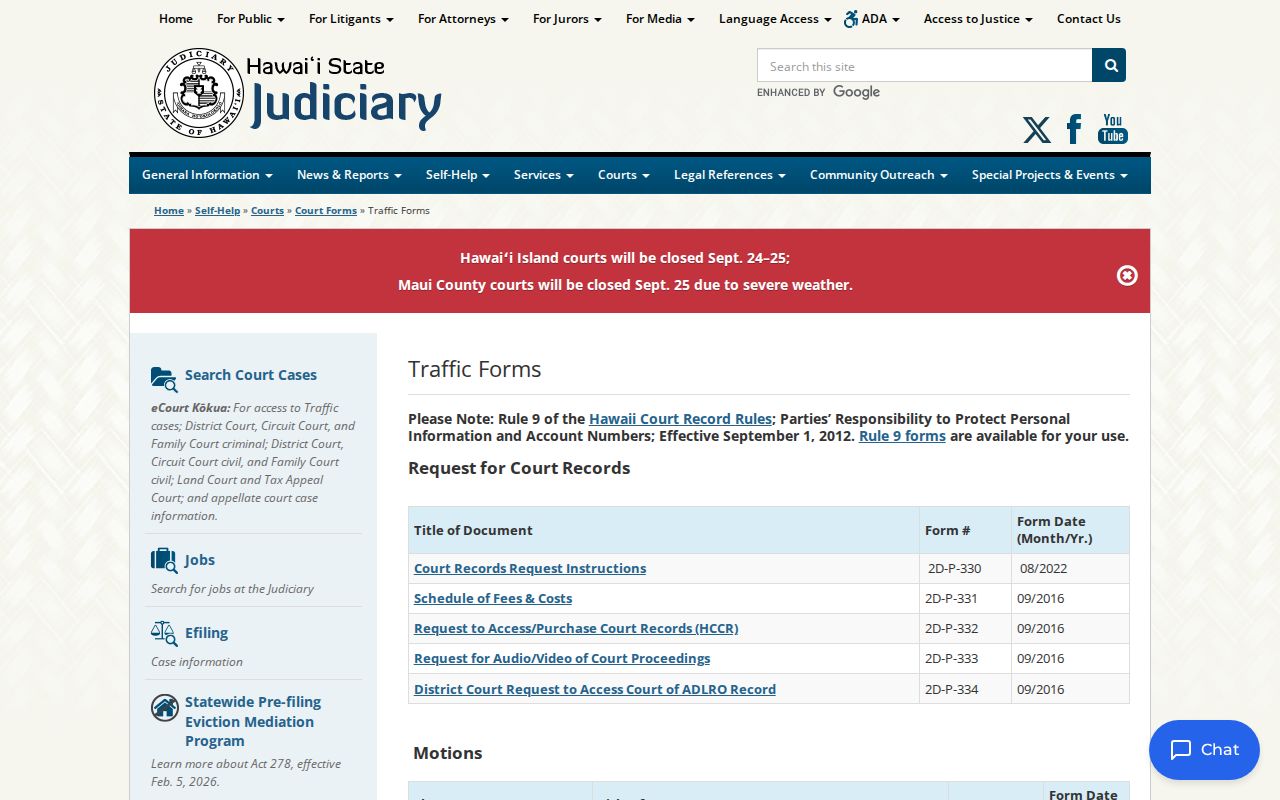
Use the court's current set-aside instructions in Hawaiʻi. An outdated or blank copy invites mistakes. Hawaiʻi's 90-day rule drives what the filing must say. A motion filed within 90 days states good cause for the missed response. A filing after 90 days must set out exceptional circumstances and explain the delay. In either window, the bond equals the amount due on the judgment. Once posted, the Hawaiʻi stopper lifts while the court resolves the motion. Denial has a cost. The deposit may then be applied to the judgment. If the judgment is vacated instead, the Hawaiʻi court gives directions on the next step. This is why the label matters. Ask whether the Hawaiʻi notice says "default judgment" or points to a bench warrant. The first is Hawaiʻi's civil traffic process. The second is an order tied to a required appearance or other Hawaiʻi court obligation, and the issuing clerk must confirm it. Do not send the Hawaiʻi bond as bail. If the label is unclear, ask the Hawaiʻi court which form and filing category applies before using any blank form for this warrant check. Note: the civil set-aside bond is not bail and does not recall any separate criminal warrant.
Hawaiʻi Traffic Collections and Warrant Status
A Hawaiʻi civil traffic judgment referred to a collection agency changes the payment route. Payment then follows that agency's instructions. The Hawaiʻi referral clock depends on the amount. Judgments of $500 or less are referred after 90 days. Judgments over $500 go after 180 days. Collection fees can ride along in the judgment. These are civil debt-collection steps in Hawaiʻi, not evidence that an arrest warrant or warrant record exists. Confirm that a Hawaiʻi notice names the right judgment before paying. Ask which balance is due. Keep the receipt. Then check with the Hawaiʻi court whether the case still carries a required appearance, a set-aside motion, a license stopper, or a separate bench warrant. An agency can accept payment on a referred judgment. Only the issuing Hawaiʻi court can confirm its own order and whether court process remains active. Payment does not update a separate Hawaiʻi warrant record. A Hawaiʻi collection notice is not an arrest notice. Paying the Hawaiʻi collection balance will not recall a different warrant. If a Hawaiʻi case was referred, follow the agency's authorized payment route. Then verify the Hawaiʻi court record. If a required appearance is also pending, contact the court about that obligation separately and ask about warrant status.
Traffic Warrant vs Driver Record
People often mix up two very different Hawaiʻi records. A Hawaiʻi warrant is a judicial order tied to a court case. A driver history is a Hawaiʻi licensing record, plain and simple. Then there is the civil stopper. That is a restriction tied to a default judgment, and it can block issuance or renewal of a driver license. It is still not the warrant itself. Neither a Hawaiʻi history request nor a payment screen counts as a warrant check. Clearing a court order does not rewrite unrelated entries in a driving history either. So do not infer warrant status from a separate record product. Contact the issuing division for the case answer. Ask the Hawaiʻi licensing authority about the driver record. The county directory helps route you to the local circuit court or police department when needed. A driver record, in short, is not a traffic-warrant record.
| Feature | Traffic Warrant | Driver Record |
|---|---|---|
| What It Is | A court order in a traffic-crime or other case | A record of licensing and driving-history information |
| Custodian | The issuing Hawaiʻi court | The Hawaiʻi licensing record custodian |
| How It Clears | Through the issuing court’s recall, appearance, or other order | Not cleared by resolving a warrant; history rules apply separately |
| Where to Check | Confirm with the issuing court; route locally through the county directory | Use the appropriate licensing-record process, not a warrant portal |