
Municipal Court Warrants in Hawaiʻi
People search for municipal court warrants, but Hawaiʻi has no city court tier at all. No justice-of-the-peace court exists in Hawaiʻi either. No county magistrate sits in the state. The Hawaiʻi state Judiciary runs the whole show, and Hawaiʻi District Court does the work closest to what other states hand to municipal courts. It takes the traffic and ordinance cases. So a Hawaiʻi notice that says "city warrant" still points to a Hawaiʻi court with state judges and clerks. Find that court before assuming a city official holds the file. The label by itself proves nothing about who issued the order. What matters is what the Hawaiʻi case actually contains. The legal event might be a summons. It might be a civil traffic default. It might be a bench warrant in a Hawaiʻi District Court case. Those three Hawaiʻi processes are not interchangeable. A Hawaiʻi bench warrant follows a missed appearance or a failure to comply, while a civil default or a driver-license stopper travels a separate Hawaiʻi traffic path. The Hawaiʻi order and the case docket show what happened. The phrase "municipal warrant" alone never does.
No Municipal Court Warrants in Hawaiʻi
Hawaiʻi's court map is one statewide system. There is no patchwork of independent city courts here. Hawaiʻi District Court handles traffic infractions and violations. It also takes Hawaiʻi state and county ordinance matters, plus misdemeanors within its statutory jurisdiction. Felony preliminary proceedings land there too. Every Hawaiʻi court in this structure belongs to the Hawaiʻi Judiciary, never to a city government. County boundaries still matter in Hawaiʻi. They simply route you to the right circuit and courthouse. What they do not do is create separate county trial courts. The Judiciary's District Courts information page lays out this Hawaiʻi jurisdiction and how each Hawaiʻi District Court operates.
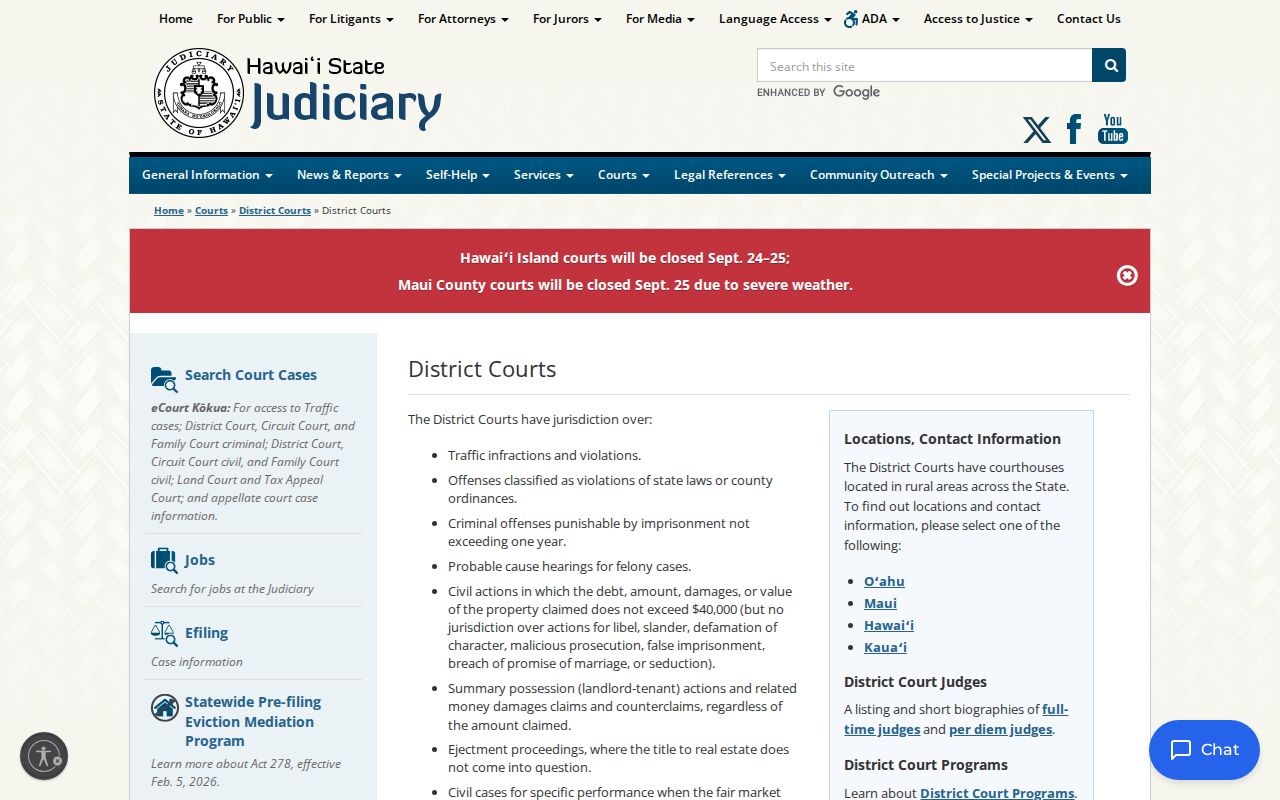
Use the District Court case route when a Hawaiʻi city citation or ordinance notice points to a state court case.
How Municipal Warrants Differ From County Warrants
Get the labels straight first, because the comparison only makes sense after that. Hawaiʻi has no municipal court and no separate county-court tier. A Hawaiʻi city ordinance matter can still become a District Court case. What people call a "county warrant" in Hawaiʻi is usually just a warrant in a case based in one Hawaiʻi circuit, not an order from some self-governing county judiciary. Miss a required appearance there and a bench warrant can follow under Hawaiʻi procedure for that case. The Hawaiʻi bench warrants page walks through that process. In Hawaiʻi practice, the county name works as a routing clue, nothing more. The Hawaiʻi issuing court, the circuit, and the case type decide which record office can actually confirm the order. Hawaiʻi county police and the statewide Sheriff Division both play service roles. Neither one builds its own municipal court docket.
| Question | Municipal-court query | Hawaiʻi court route |
|---|---|---|
| Issuing court | No separate municipal court exists | District or Circuit Court, based on the case |
| Ordinance matter | No city-court docket tier | District Court hears state and county ordinance matters |
| Service role | No separate municipal-court marshal tier appears in the Judiciary structure | DLE Sheriff Division is statewide; county police also serve local functions |
| Public lookup | No public municipal-warrant roster located | eCourt Kōkua shows available case information; eBench Warrants is restricted to approved agencies |
Hawaiʻi Municipal Warrants and County Circuits
The directory here holds five county folders, yet Hawaiʻi runs four active judicial circuits and four Hawaiʻi county police departments. Those counts track two different Hawaiʻi systems. Kalawao sits in the directory as its own county folder. But Hawaiʻi court routing treats it as part of Maui's Second Circuit arrangement, and no separate Kalawao police department exists. Every other local police agency is a Hawaiʻi county department, while the Sheriff Division belongs to the Hawaiʻi Department of Law Enforcement. A Hawaiʻi county name can help you find the right court and police route. It will not tell you that a separate county court or municipal clerk holds a Hawaiʻi warrant, because none does. District, Circuit, and Family Court divisions all operate inside the statewide Hawaiʻi Judiciary. The Hawaiʻi case type and issuing division determine where to ask about a record. So trace a Hawaiʻi city ordinance citation from its case number or notice back to its actual Hawaiʻi court instead of mailing it off to an assumed municipal court. County directories are a routing layer. The issuing Hawaiʻi Judiciary court controls the Hawaiʻi case and its warrant status.
How to Check a Municipal Court Warrant
Hawaiʻi has no municipal court at all, so a "municipal warrant" here really means the warrant sitting inside a Hawaiʻi court case that started with a city, county, or traffic notice. The paper trail is your first tool. Pull out the citation, summons, or case number and treat it as the key. From there, use the public Hawaiʻi Judiciary portal as a case locator to find which court holds the file, then call the issuing Hawaiʻi District Court division and ask the clerk point blank whether a bench warrant exists and what the court wants done about it. The Hawaiʻi county directory helps you match the case location to its circuit and the right local court route, so you are not guessing which division to phone. One caution on names. A Hawaiʻi search that turns up only a name can match the wrong person, so check the case number, the court, and any dates you know before you assume the record is yours. And when eCourt Kōkua shows no case, or its docket does not answer the warrant question, ask the clerk whether other Hawaiʻi courthouse records or another division hold it. The online result is where a warrant check starts, not where it ends.
- Read the notice or citation to identify the case number, location, and type of matter.
- Search available case information in eCourt Kōkua by case or party details.
- Use the county directory to find the relevant circuit and District Court contact route.
- Ask the issuing clerk to confirm warrant status, bail, filing, and appearance instructions.
eCourt Kōkua and Hawaiʻi Municipal Warrants
eCourt Kōkua is the public case-information portal of the Hawaiʻi Judiciary. It is not a municipal-warrant list, because no such tier exists in Hawaiʻi. The portal covers available Hawaiʻi traffic, District, Circuit, and Family Court case information, among other listed case types, and its manual documents searches by Party, Case, Vehicle, Filing Date, and Upcoming Hearings. What it does not document is a warrant-only search or a warrant-status filter, and its Hawaiʻi case data may not reach every public courthouse record. The Hawaiʻi Judiciary's availability page spells out the system and its limits, and that official page shows the public Hawaiʻi access information rather than any person-specific query or warrant result. Treat the portal accordingly. Use it to identify the case and the court, then confirm the warrant itself with the issuing clerk.
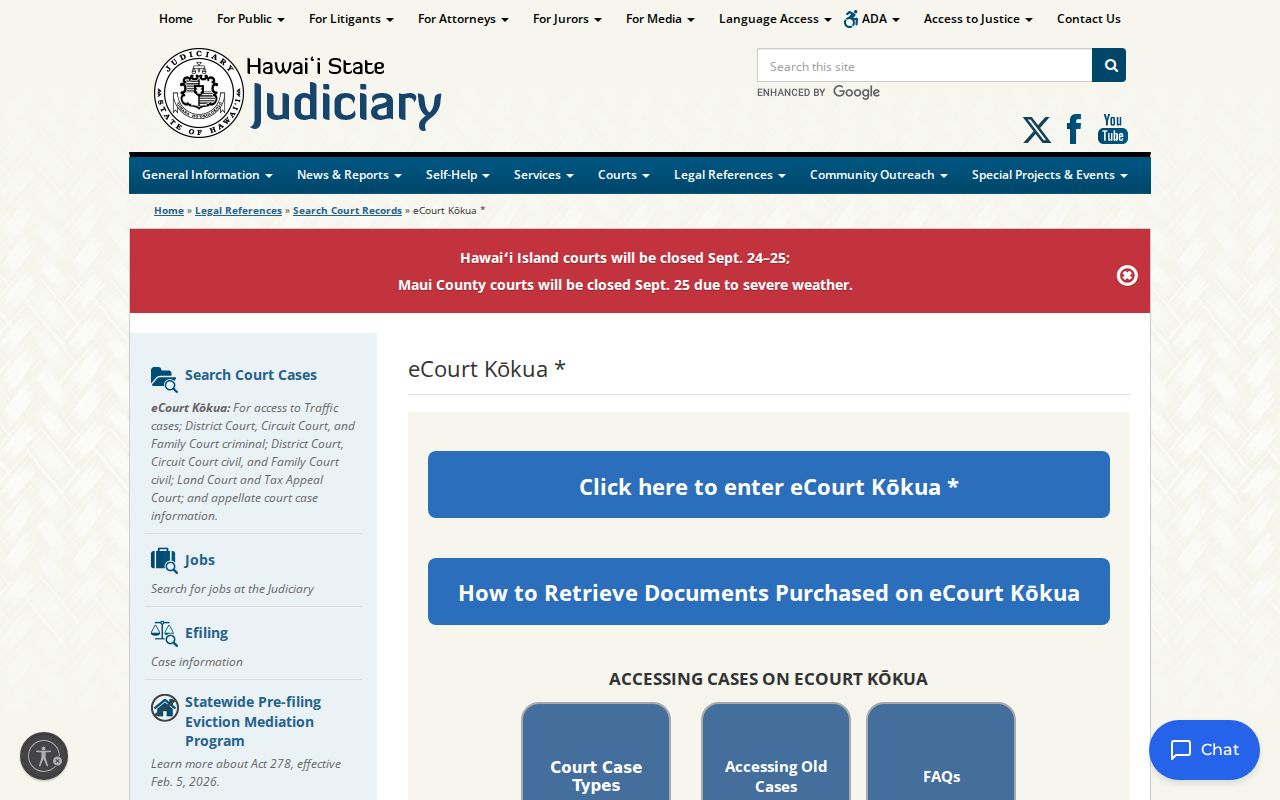
A Hawaiʻi case search is only a lead. A missing result does not prove a warrant is absent or cleared.
What a Municipal Warrant Shows
Hawaiʻi publishes no separate municipal-court warrant form or result schema, since there is no municipal court tier. When a notice points to a Hawaiʻi District Court bench-warrant case, the signed order and the court docket are the records that matter. Under HRPP Rule 9, a Hawaiʻi criminal warrant identifies the person, the offense, the issue date, and the issuing court, and it states bail and any other conditions when set. The Judiciary rules index carries the current rules. A public Hawaiʻi docket view can show docket events or case information, but it is not a complete warrant record, so read each field in the context of the actual Hawaiʻi order instead of treating a case-status label as a warrant status. eCourt Kōkua can display case status and docket events, yet its Hawaiʻi codes describe case events and may not establish whether a separate warrant remains active. For the ground truth, the issuing Hawaiʻi clerk can confirm whether an order was served, recalled, returned unserved, or changed.
| Case or warrant number | Use the number printed on the actual notice or court order; no municipal format is established |
|---|---|
| Person and offense | Rule 9 calls for the named or sufficiently described person and the offense |
| Issuing court | The District Court division or other actual court named in the order |
| Bail and conditions | Order terms when bail or other arrest conditions are set |
| Docket status | Case events may help, but the clerk confirms current warrant status |
| Return or service | Service details belong to the warrant return and may not appear in a public case view |
Hawaiʻi Municipal Warrants and Civil Defaults
A Hawaiʻi civil traffic default carries real consequences, but it is not automatically an arrest warrant. Hawaiʻi Judiciary instructions describe the chain: an unanswered citation can become a default judgment, and an unpaid judgment can trigger a driver-license stopper and a collection referral. That Hawaiʻi stopper limits license issuance or renewal. It is not an arrest order, and it is not a public warrant list. HRS §291D-7 governs the Hawaiʻi civil traffic default process. A Hawaiʻi traffic-crime case works differently when the court requires an appearance; missing that hearing may lead to a Hawaiʻi District Court bench warrant under criminal procedure. For an eligible civil default, the Judiciary describes a motion to set aside the judgment along with a cash appearance bond equal to the amount due, and posting that bond lifts the stopper while the motion is resolved. That civil fix does not recall an unrelated criminal warrant. The Judiciary stopper instructions walk through this civil route, and eTraffic Hawaiʻi accepts eligible citation payments, though it is not a warrant lookup and does not handle every default or required appearance.
- Default judgment
- A civil traffic judgment entered after the required response or appearance does not occur.
- License stopper
- A traffic-related restriction on issuing or renewing a driver license, not an arrest warrant.
- Bench warrant
- A court-issued warrant in a pending matter, including some missed required appearances.
Resolving a Municipal Court Warrant
With no municipal court in Hawaiʻi, do not send payment or a motion to an assumed city clerk or judge. Start by identifying the paper. Is the Hawaiʻi notice a civil traffic matter, an ordinance case, or a criminal case? Once you know, ask the issuing Hawaiʻi District Court division what the current order requires. If a Hawaiʻi bench warrant exists, the court may set a hearing, a motion, payment, or another step under the case. Under HRS §607-8.5, a Hawaiʻi court may assess up to $50 when it issues a bench warrant for failure to appear or comply, and that possible assessment is not bail. A lawyer can help with a motion to recall, but filing a Hawaiʻi request does not by itself cancel the warrant. For a Hawaiʻi civil traffic default, follow the Judiciary's set-aside and stopper instructions rather than treating the license restriction as an arrest warrant. For a criminal case with a Hawaiʻi bench warrant, ask the clerk what recall motion or appearance is required. Either way, keep the Hawaiʻi court's filed order and verify that the case record reflects the result.
- Use the notice or public Hawaiʻi case record to identify the actual Hawaiʻi court and case type.
- Confirm active or recalled status, bail, filing, payment, and appearance instructions with that Hawaiʻi court.
- Ask counsel or the clerk about the required motion or hearing, then follow the court's order.
- Keep the filed order and confirm the court record reflects the outcome.
Caution: A walk-in does not guarantee that arrest will be avoided or release will be immediate. Do not treat a missing online result as proof that a warrant was cleared.
Route Hawaiʻi Municipal Warrants by Circuit
Hawaiʻi runs one statewide Judiciary with four active circuits. The First Circuit sits in Hawaiʻi on Oʻahu. The Second covers Maui County, which includes Molokaʻi, Lānaʻi, and Kalawao. The Third serves Hawaiʻi Island through its Hilo and Kona districts. The Fifth handles Kauaʻi and Niʻihau. A Fourth Circuit no longer exists in the Hawaiʻi Judiciary; it merged into the current structure back in 1943. A location on a Hawaiʻi citation can point you toward the right circuit, but the case type and court division still decide which clerk holds the warrant record. The Judiciary's own Hawaiʻi court overview lays out the statewide structure in plain terms. When a Hawaiʻi local ordinance or traffic case needs routing to its circuit, the Hawaiʻi county directory is the working tool. That directory lists five folders, because Kalawao appears separately even though its Hawaiʻi judicial route runs through the Second Circuit. Family and juvenile matters follow different rules entirely. If the case is one of those rather than an ordinance case, Family Court confidentiality limits can narrow what any Hawaiʻi public search returns. Ask the issuing Hawaiʻi division about the record path that is actually open to you. Hawaiʻi also has no standard statewide term like capias or capias pro fine. Go by the wording on the real Hawaiʻi court paper in hand. A municipal-court warrant form borrowed from another state tells you nothing about Hawaiʻi procedure. The clerk who issued the warrant can explain the next step, so call that Hawaiʻi office directly.