
The Hawaiʻi Warrant System
Hawaiʻi runs its courts differently from most states. There is no layer of separate county trial courts, and no county sheriff in each county. The Hawaiʻi State Judiciary is unified across the four active circuits instead. District Courts take traffic, ordinance, misdemeanor, and preliminary matters. Circuit Courts hold general jurisdiction, and Family Court handles family and juvenile cases inside each circuit. Whoever issues an order keeps the case record and controls its warrant status, so the Hawaiʻi warrant system is really a web of courts, law-enforcement users, and service agencies rather than one public county warrant list. For agencies, the Judiciary operates eBench Warrants, open only to approved users. The Sheriff Division of the Hawaiʻi Department of Law Enforcement serves warrants and court process statewide, while county police departments handle local enforcement. The public side is eCourt Kōkua, which shows available Hawaiʻi case information but is not a warrant registry. Use the county directory to find your circuit and local agency, then ask the issuing Hawaiʻi court to confirm the current warrant order.
How Hawaiʻi eBench Serves Agency Warrant Searches
eBench is built for agencies, not for neighbors. Approved law-enforcement and criminal-justice members of the Hawaiʻi Judiciary log in with an authenticated agency role, and there is no public self-registration. The public eBench landing page states that authorized users may search and view covered traffic, criminal, and non-Family Court civil warrants, with Hawaiʻi warrant information updated multiple times daily. What it does not expose is any public view of the search fields, the agency list, warrant-status values, or result limits. Think of the tool as an electronic warrant service giving approved officers access outside ordinary court-counter hours. Its job is operational reach, not a browseable public list. The current Hawaiʻi page describes statewide infrastructure yet publishes no county-by-county completeness report and no list of which agencies submit which warrant classes. So do not assume every court event or warrant order shows up the same way. For a personal answer, the issuing Hawaiʻi court remains the place to ask.
Statewide Warrant Databases
People often lump several Hawaiʻi services together as one database. They are not. eBench is the restricted Hawaiʻi warrant service. eCourt Kōkua is the public case-information and document portal. eTraffic Hawaiʻi takes payment for eligible citations, and the FBI's NCIC is a restricted national law-enforcement system rather than a public search site. Nothing in the public materials says every Hawaiʻi warrant enters each system or appears in every result. The table draws these lines. A warrant index, a Hawaiʻi case docket, a payment tool, and a national system each answer a different question. Only the issuing court can resolve a question about its own warrant order. A public case entry may help you find the file, but a payment confirmation, or an absence from an online display, cannot certify that every warrant action is finished. Treat a public search, an active warrant, an outstanding order, a bench warrant, and an arrest-warrant result as separate things, because in Hawaiʻi they are.
| System | What It Indexes | Run By |
|---|---|---|
| eBench Warrants | Covered traffic, criminal, and non-Family Court civil warrants for approved users | Hawaiʻi State Judiciary |
| eCourt Kōkua | Publicly available court case information and documents, not a warrant-only index | Hawaiʻi State Judiciary |
| eTraffic Hawaiʻi | Payment for certain eligible traffic citations, not warrant status | Hawaiʻi State Judiciary |
| NCIC | Restricted national law-enforcement information; public access is not available | Federal Bureau of Investigation |
Note: eCourt Kōkua records cases and eTraffic processes certain payments; neither replaces eBench or confirms every warrant.
Hawaiʻi eBench Not a Public Warrant Search
Do not look for a search box on eBench. Hawaiʻi eBench shows an access notice and an agency login, not a public form, and no resident can type a name and browse warrant results there. The approved-user rule is how the Hawaiʻi tool is designed. It is not a temporary outage or a missing public account, and nobody should register, borrow another person's credentials, or be told to try. The public route for available Hawaiʻi case details is eCourt Kōkua. Its data can include docket events relevant to a Hawaiʻi warrant, but the Judiciary cautions that online information does not contain all public courthouse records and may not be complete or current. A missing case, a masked entry, or a status label does not prove that no Hawaiʻi warrant exists. Call or visit the issuing court clerk to confirm, and ask what procedure applies. There is also no public statewide Hawaiʻi license-stopper lookup. A driver-license stopper belongs to the Hawaiʻi traffic-default process and is not an arrest warrant. Each kind of access, whether public case view, payment access, or restricted warrant access, answers a narrower question, and none can certify every open order across Hawaiʻi.
How a County Warrant Enters the Statewide System
Every Hawaiʻi warrant begins as a Hawaiʻi State Judiciary case, not a county court matter. A judge signs process under the rule that fits the case type. The issuing division keeps the docket. From there, Hawaiʻi Judiciary systems move covered warrant information to approved law-enforcement users, and the current Hawaiʻi eBench page describes a statewide service with multiple daily updates. Hawaiʻi Judiciary reporting also describes electronic transfer and synchronization for specified warrants. Even so, the public record does not name every participating court or agency.
Warrant flow: Hawaiʻi issuing court and case record › Hawaiʻi Judiciary electronic transfer for covered warrants › Hawaiʻi eBench for approved agency users › law-enforcement service, with current status confirmed by the issuing court.
That flow is not a promise. A warrant may not show in each index, and service does not instantly change every public docket. Hawaiʻi publishes no county reporting roster. There is no complete public active-warrant list and no published record-age range. Hawaiʻi also lacks a separate municipal or justice-of-the-peace court tier. To find the right local route, use the county directory. The folder leads to circuit and police context, not proof that a county sheriff or county warrant index exists.
How Four Circuits Feed Hawaiʻi Warrant Systems
The Hawaiʻi statewide court map has four active judicial circuits. First Circuit sits on Oʻahu. Second Circuit covers Maui County, including Kalawao. Third Circuit handles Hawaiʻi Island, and Fifth Circuit covers Kauaʻi. There is no current Fourth Circuit. District, Circuit, and Family Court divisions all sit within this Hawaiʻi Judiciary structure. The county directory shows five folders because Kalawao is listed separately, yet Hawaiʻi has four county police departments and no separate Kalawao police or sheriff office. This geography shapes how a reader routes a case. Hawaiʻi County matters can use Third Circuit locations in Hilo or Kona. Maui and Kalawao use the Second Circuit structure. Oʻahu is First Circuit; Kauaʻi is Fifth. The case type determines which Hawaiʻi court division handles it. A Hawaiʻi eBench statewide service does not erase those local court assignments, and a directory folder is not a separate warrant custodian. At Hawaiʻi's statewide scale, cautious wording matters too. Public materials describe electronic warrant transfer but publish no complete reporting map or warrant inventory by circuit. Identify the case court first. Then ask that Hawaiʻi division to verify whether the warrant is current, recalled, or subject to another order. Note: The five directory folders are routing entries, not five separate county courts or sheriff offices.
US Marshals and Fugitive Warrants in Hawaiʻi
Federal warrants live in a system apart from Hawaiʻi State Judiciary warrants. The U.S. District Court for the District of Hawaiʻi handles federal cases. The U.S. Marshals Service serves federal process and coordinates the Hawaiʻi Fugitive Task Force, which blends federal, state, and local resources for fugitive matters. Its official Hawaiʻi district page describes the program and its tip channels; the profile material there is not a complete Hawaiʻi warrant search or federal warrant roster. The PACER CM/ECF lookup for the District of Hawaiʻi identifies the federal court's case-filing location, and it is not a federal or Hawaiʻi public warrant search.
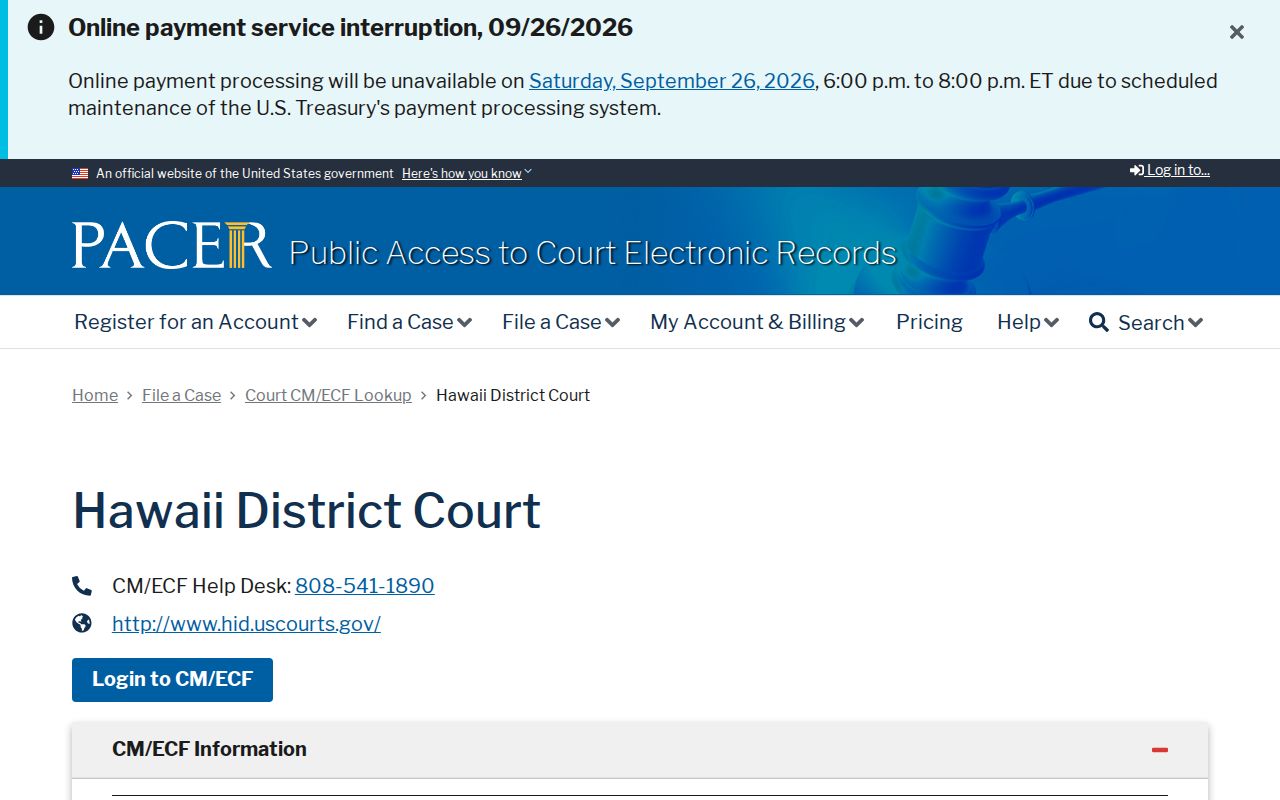
The federal court lookup is a route to case filings, nothing more. Sealed or pre-filing warrant material may not appear, and it cannot verify a Hawaiʻi state warrant. For a federal case, use PACER for public filings where available. State eCourt Kōkua and Hawaiʻi eBench are not federal warrant systems. A federal docket search will not verify a Hawaiʻi state court order either. For a Hawaiʻi state warrant, contact the issuing Hawaiʻi Judiciary court. For federal status, contact the federal court or qualified counsel rather than treating a Hawaiʻi task-force tip line as a records desk. The District of Hawaiʻi Clerk's Office contact page lists federal clerk channels; it is a contact route, not a public warrant lookup.
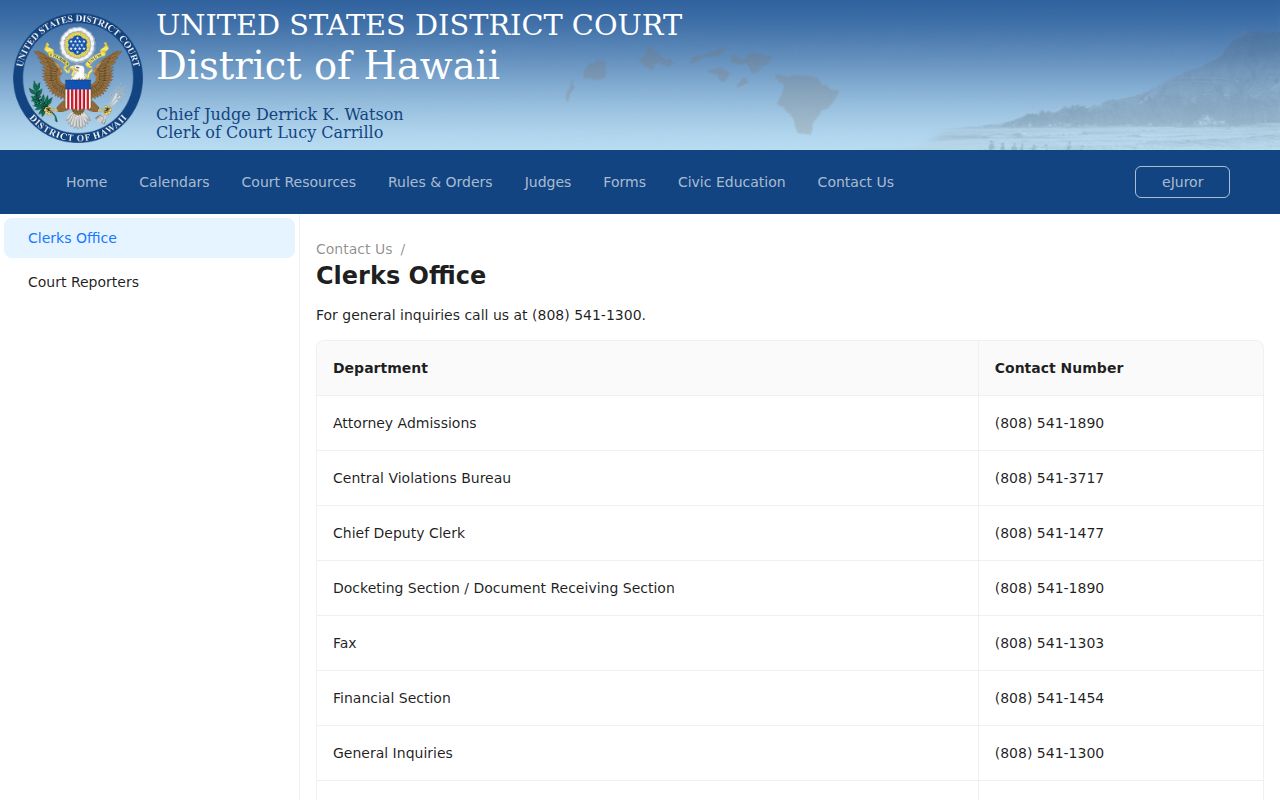
The clerk page helps you locate a contact for a Hawaiʻi federal filing. It reveals no personal warrant status. And it never replaces the issuing Hawaiʻi Judiciary court for a state order.
DLE Sheriff Division Serves Hawaiʻi Warrants Statewide
Hawaiʻi reorganized its law enforcement on January 1, 2024. The Department of Law Enforcement was created by Act 278, Session Laws of Hawaiʻi 2022. Within it, the Hawaiʻi Sheriff Division serves arrest warrants and other court documents across all the islands. It also guards courts and state facilities, moves people between islands, and coordinates with county and federal partners. DLE belongs to Hawaiʻi state government. It does not own eBench. The Judiciary runs that system. This structure differs from states where each county elects a sheriff and keeps a countywide warrant office. Hawaiʻi instead has four county police departments plus one statewide Sheriff Division. The division's contact numbers reach its service sections and offices. None of them works as a general public warrant-status hotline. For a personal case, ask the issuing Hawaiʻi court. The county directory can still show local police context. It implies no county sheriff exists in Hawaiʻi. Serving papers is not the same as deciding them, either. A Hawaiʻi judge issues, recalls, or quashes a warrant. The Judiciary maintains the case while officers carry out service. Questions about release, surrender, or recall in Hawaiʻi go through the court's direction, and a lawyer can advise on the case.
Statewide System vs County Warrant List
Hawaiʻi has no public statewide eBench search, and no five-county public sheriff roster exists either. What the state has is a restricted statewide tool plus the record kept by each issuing Hawaiʻi court. Those are different views of the same work. County police pages in Hawaiʻi describe what those agencies do, but none publishes a full public active-warrant list, so a county site can help with context rather than with a warrant lookup. Think of the county directory as routing for Hawaiʻi, not a promise that every county runs a searchable warrant list. So what should you actually ask for? If a public case portal in Hawaiʻi turns up a lead, take it to the issuing Hawaiʻi court and ask whether the warrant is still in effect. If a local police page offers a public-information route, use it for its stated purpose only. It never replaces the court's order, and the directory simply points you to the right county context once you know where the Hawaiʻi case sits.
| Feature | Statewide System | County Warrant List |
|---|---|---|
| Public Access | eBench is limited to approved agencies | No full public county roster located in reviewed sources |
| Record Source | Judiciary service for covered electronic warrant information | The issuing Hawaiʻi court’s case and order |
| Coverage | Public scope identifies specified warrant classes; full roster is not published | Local agency pages describe functions, not an all-warrant search |
| Best Confirmation | Authorized agency access, not a public lookup | Contact the issuing court; use the county directory for routing |
Note: The restricted Hawaiʻi statewide service is not a public county roster, and the issuing court keeps the case.
Hawaiʻi Warrant, Case and Payment Tools Differ
eCourt Kōkua handles the public side of Hawaiʻi case information, and its current Hawaiʻi manual spells out the search modes: Party, Vehicle, Case, Filing Date, and Upcoming Hearings. Those modes can help you find a Hawaiʻi case. What they do not create is a warrant-only search or any stopper-status control. Online case information may leave out public courthouse records in Hawaiʻi, and sealed or confidential material never appears. The other tools sit elsewhere. Hawaiʻi eBench serves approved law-enforcement and criminal-justice users who need covered warrant information, so a member of the public cannot query it. eTraffic Hawaiʻi takes payment for eligible citations, generally those payable without an appearance and within the response window. It will not resolve a delinquent Hawaiʻi citation, a post-hearing balance, a default judgment, or a required criminal appearance. A receipt only proves the payment went through. It does not prove the Hawaiʻi court recalled a separate warrant. These boundaries matter when you are helping a relative sort out a notice. Use eCourt Kōkua for available Hawaiʻi case information, use eTraffic only if the citation fits its payment rules, and contact the Hawaiʻi court directly for warrant status or a stopper remedy. No public route reaches eBench, and no online result in Hawaiʻi promises to be complete or current.
Hawaiʻi Family Court Warrant Coverage
The public Hawaiʻi eBench page says its access covers traffic, criminal, and non-Family Court civil warrants. A Hawaiʻi Judiciary FY25 report tells a slightly different story, describing electronic bench-warrant information that involves District, Family, and Circuit Courts along with traffic synchronization. Neither statement settles whether Family Court civil warrants fall inside the public-facing eBench scope. The honest public answer for Hawaiʻi is that the published descriptions differ and the specific coverage remains unresolved. Do not read "statewide" as a promise that every Hawaiʻi case category shows up the same way. Family Court handles family and juvenile matters, and some of those records carry added confidentiality rules. Public Hawaiʻi eCourt Kōkua access is limited too, by court-record rules and by sealed or confidential categories. So ask the issuing division about the particular case rather than assuming it sits inside or outside an internal warrant system. The same caution applies to status and completeness claims. Neither the public eBench notice nor the Hawaiʻi FY25 report provides a public agency participation roster, an all-circuit search result, or a Family civil coverage detail that would close the gap. The issuing Hawaiʻi court remains the source for the case record and for whatever comes next.
Hawaiʻi Warrant-System History and Technology
Hawaiʻi moved its warrants onto screens in 2009. The Judiciary's 2009 release announced that eBench launched in March 2009. The plan was phased, meant to stretch electronic warrant access past normal court hours. Implementation work ran from 2008 to 2012, so March 2009 marks launch only, not final statewide completion. Hawaiʻi started with traffic warrants and grew from there. Today the Judiciary updates covered warrant data multiple times a day. FY25 reporting describes some transfers running several times daily and within 24 hours. Public case access grew on its own track. The Judiciary launched eCourt Kōkua in 2010 as a successor interface for CourtConnect and JIMS case information. Older Hawaiʻi traffic data goes back to 1994. Migration can affect those older docket entries, though. In May 2026 the Hawaiʻi portal got a refreshed interface plus an updated manual, with Party, Vehicle, Case, upcoming-hearing, and document functions. It is still a public case portal. It is not a warrant search. The technology mirrors Hawaiʻi's statewide court structure rather than county-owned courts. Warrant information sits with the Judiciary process and is shared only for authorized law-enforcement use. The DLE Sheriff Division and county police each handle their own service roles. Public users see a narrower layer of all this. A Hawaiʻi court clerk must confirm current warrant status. The eBench launch, the portal updates, and service changes tell the system's history. They say nothing about how many Hawaiʻi warrants are outstanding right now.