
The Hawaiʻi Most Wanted Program
Hawaiʻi publishes no public statewide most-wanted roster. That is a statement about public access only, since Hawaiʻi law-enforcement agencies keep restricted warrant information of their own. The Hawaiʻi Department of Law Enforcement’s Sheriff Division serves court process across the state, and the Hawaiʻi Judiciary runs eBench, a warrant service limited to approved agency users. Neither one works as a public fugitive list or a Hawaiʻi warrant search. The U.S. Marshals Service District of Hawaiʻi page adds a separate federal angle. It describes a federal fugitive program, links selected Hawaiʻi profile information, and gives task-force details plus a tip line. Treat it as a curated channel, not a complete Hawaiʻi warrant index. A profile can show how an agency asks the public for help. But to confirm a Hawaiʻi court matter, contact the issuing Hawaiʻi court about the warrant record.
U.S. Marshals Service, District of Hawaiʻi
The official Hawaiʻi district page describes the Hawaii Fugitive Task Force and selected fugitive-information channels. It is not a full Hawaiʻi state warrant search or warrant roster.
Hawaiʻi Most Wanted Lists Are Curated
Every Hawaiʻi fugitive profile you see is a chosen item, not a registry. It targets one agency priority at a time. So it cannot show every open Hawaiʻi warrant, every court, or every person under an order. Access limits run the same direction. The public eBench page in Hawaiʻi is only an access notice for approved law-enforcement and criminal-justice users, and its search screen stays closed to the public. The Hawaiʻi Judiciary’s public case portal can display docket entries, but it is not a warrant-only search and leaves out many official court records. Keep the limits in mind when a Hawaiʻi profile, an arrest release, or an old notice circulates online. Profiles get pulled or changed when a case moves. A Hawaiʻi court warrant can sit out there with no publicity at all. And a notice never settles current court status or how the underlying case gets resolved. In Hawaiʻi, only the issuing court can confirm the record, the warrant status, and the required next step.
Statewide vs County Most-Wanted Lists
No public Hawaiʻi DLE statewide wanted roster exists, and the federal profile program picks its cases. County agencies and Crime Stoppers channels share local public-safety information, yet none of it equals a complete Hawaiʻi warrant register. The state also breaks the usual mold. Hawaiʻi has four county police departments rather than a sheriff office per county, so the familiar wanted-list-versus-county-sheriffs model simply does not fit. The table lays out what each Hawaiʻi route can and cannot offer, comparing the kinds of public fugitive information available rather than the completeness of any warrant list. A reader hunting a local agency page should start with the county directory and follow the court or police route that matches the notice. That directory leads to records contacts, not to a roster lookup.
| Feature | Statewide List | County List |
|---|---|---|
| Run By | No public full-state DLE roster identified; USMS runs a separate federal district program | County police and local tip partners; no county sheriff tier |
| Who Is Included | Selected Hawaiʻi fugitive profiles or agency notices, not all open warrants | Local Hawaiʻi agency notices where published, not a complete court index |
| Tip Route | Official USMS district contact or tip channel | Official Crime Stoppers contacts listed by the state Attorney General |
| Where to Start | USMS District of Hawaiʻi for selected wanted profiles | The Hawaiʻi county directory for local agency routes |
Open the Hawaiʻi county directory to reach the Hawaiʻi County Police Department, Honolulu Police Department, Kauaʻi Police Department, or Maui Police Department; the Kalawao entry follows the Hawaiʻi Second Circuit and Maui jurisdiction structure. These are agency routes, not public warrant rosters. Note: County tip contacts route information locally, but they do not create a statewide warrant search.
Hawaiʻi Most Wanted: USMS Profiles
The U.S. Marshals Service District of Hawaiʻi page profiles the Hawaiʻi Fugitive Task Force, a joint federal, state, and local effort that pools resources to find people wanted in fugitive matters. That role sits apart from the State Judiciary’s eBench system and from any county police records desk in Hawaiʻi. The USMS page links selected Hawaiʻi fugitive material, though only the program page matters here. No profile or identity belongs on a records page like this. For a Hawaiʻi reader, the boundary is what the task force is for. Its public tip route exists for information that may help law enforcement. It is not for asking whether you have a Hawaiʻi warrant, checking a relative’s record, or seeking legal clearance. Federal warrant service and the District of Hawaiʻi’s public court docket are separate from Hawaiʻi State court process. A federal case goes through a federal clerk or counsel. A state warrant case belongs to the issuing Hawaiʻi court.
Hawaiʻi Most Wanted Task Force Roles
The Hawaiʻi Fugitive Task Force, as the U.S. Marshals Service describes it, is a coordination layer rather than a separate public Hawaiʻi court docket. Federal, state, and local agencies appear on its partner roster. They may pool resources to find people sought in fugitive matters. The focus tends to fall on serious cases. So a Hawaiʻi partner list on an agency page is a program description, nothing more. It does not prove that every named office handles each warrant or tip, and it is not a fugitive-record index you can search. On the serving side, the roles split cleanly. DLE's Sheriff Division serves Hawaiʻi state court warrants and process statewide. The U.S. Marshals Service carries its own federal authority and coordinates the task force. Hawaiʻi county police keep their local policing roles. Recent Hawaiʻi agency materials describe cooperation across these levels, but none of them publishes a merged statewide fugitive roster or warrant list. That arrangement explains who might receive your tip. The issuing Hawaiʻi court still holds the answer on any warrant's status. One caution about names. Hawaiʻi agency pages can carry older department names, so use the current contact details on the official program page before reaching out. And a tip to the Hawaiʻi task force is not a way to check your own court record or obtain legal advice. For that, figure out whether the Hawaiʻi matter is state or federal. Then contact the right court or counsel. A tip report is not a personal warrant query, and treating it as one wastes your time and the operator's.
How to Report a Tip Safely
Share information only through an official channel, and use the one the agency actually accepts. The Hawaiʻi Attorney General's community and crime-prevention directory lists island Crime Stoppers contacts: Hilo at (808) 961-8300, Honolulu at (808) 955-8300, Kauaʻi at (808) 246-8300, and Maui at (808) 242-6966. The USMS District of Hawaiʻi page adds a 24-hour information line, (888) 869-4589, plus a Hawaiʻi task-force number, (808) 582-9000. Every number here is a tip or program line. None of them runs a personal warrant search or wanted-record lookup for callers. The community and crime-prevention directory from the Attorney General's office is the place to confirm local tip contacts.
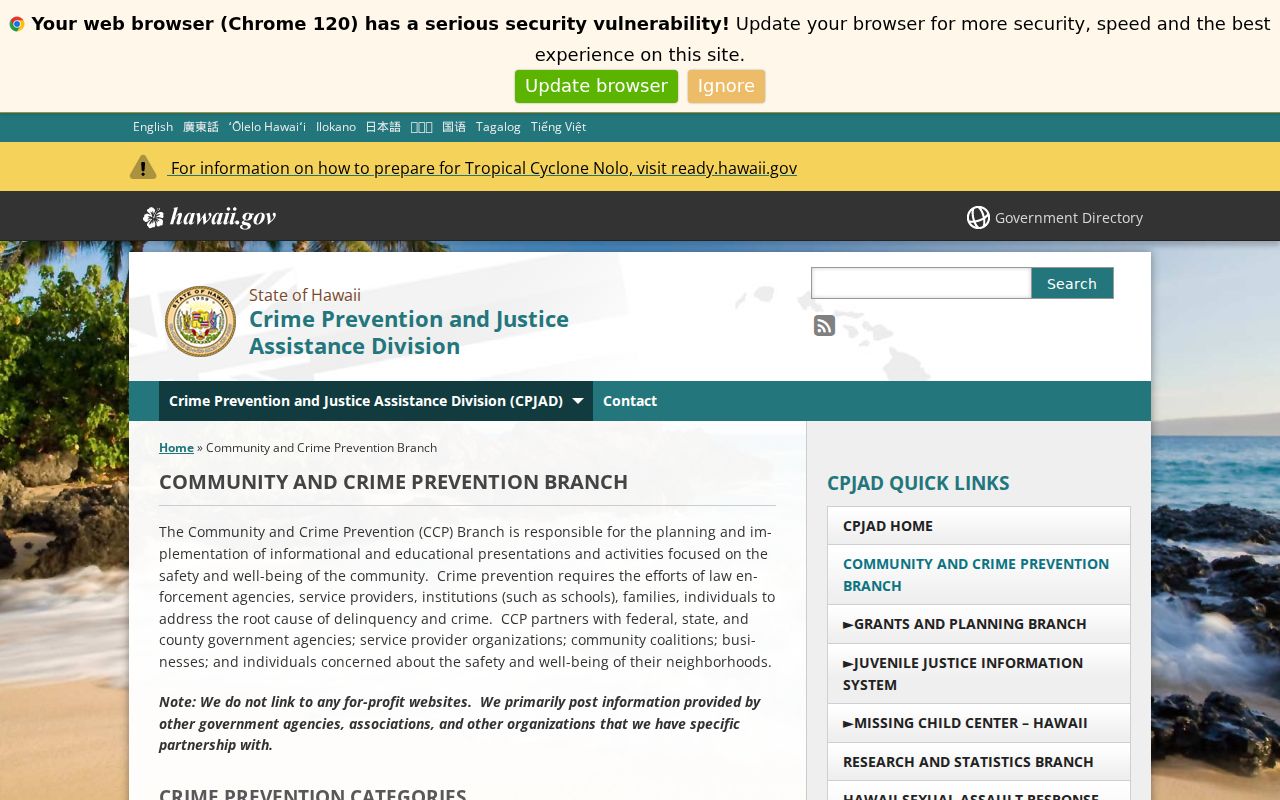
The directory itself routes residents to tip programs. It is not a Hawaiʻi most-wanted roster or a warrant search. Before calling any Hawaiʻi program, open the official agency page and confirm the right channel and current instructions. Tip operators can tell you whether a report may stay anonymous and whether a reward applies. Do not assume rewards exist for every report. Share only what you actually know. Never follow, contact, detain, or confront a person yourself. For an immediate emergency in Hawaiʻi, call 911 instead of a non-emergency tip line.
- Choose the official Hawaiʻi USMS or local Crime Stoppers channel that fits the information.
- Give the details you can report accurately and ask the operator how anonymity is handled.
- Follow the agency’s instructions for any reference number or reward process; terms can differ by program.
- Call 911 in Hawaiʻi for an immediate threat or emergency, and do not approach or follow anyone.
Key point: Hawaiʻi tip lines pass information to agencies; they do not verify your own warrant, and callers should never approach or detain anyone.
Note: Hawaiʻi tip programs take information for agencies; they cannot confirm a caller's own court status.
Hawaiʻi Most Wanted Tips Are Not Searches
A Hawaiʻi Crime Stoppers call or a USMS tip goes one way. You give information to an agency. It is not a personal Hawaiʻi records query, and no operator on a tip intake line can promise that a warrant is active, recalled, or absent. Hawaiʻi also publishes no public statewide eBench search or wanted-person roster; that restricted service belongs to approved personnel. The public can review Hawaiʻi eCourt Kōkua case information, but the Judiciary warns that online information is not a complete view of official court records or warrant status. A Hawaiʻi tip line that hears a caller's own case question may point that caller elsewhere, yet it never replaces the issuing court. For a personal Hawaiʻi case, find the court through the citation or an available case entry and ask the clerk about warrant status and procedure. Keep sensitive personal details out of a tip report in hopes of legal guidance. And do not read a public Hawaiʻi fugitive profile as a court-status notice or wanted-record confirmation.
Most Wanted vs an Active Warrant
A Hawaiʻi most-wanted notice is a selected publicity or tip request. An active Hawaiʻi warrant is a court order. That order can exist with no public profile or list entry at all. The two Hawaiʻi records differ in custodians, purposes, and coverage. A curated fugitive profile never shows the full warrant inventory. A case docket entry, in turn, does not by itself confirm that a warrant remains active. Treat a public Hawaiʻi wanted notice as a lead toward an official agency, not as a full court record. For the statewide split between published wanted lists and court orders, see active warrants. In Hawaiʻi, the issuing court confirms its own warrant status and the required next step. A missing profile is not evidence that no Hawaiʻi warrant exists. Appearing in a fugitive profile does not substitute for the court's current order or for advice about resolving a case. Note: A missing profile does not establish that the issuing court has no active order.
Hawaiʻi Most Wanted: No Full-State Roster
Hawaiʻi publishes no statewide most-wanted roster. No public active-warrant query spans the state either. The USMS District of Hawaiʻi page shares selected federal fugitive information along with task-force contacts. The Hawaiʻi Attorney General, for its part, lists local Crime Stoppers programs. Neither channel carries every Hawaiʻi State Judiciary warrant. For warrant records, the county-by-county route still does the work in Hawaiʻi. What authorized agencies can see internally reaches well past either public page. A news release cannot close the gap. One September 21, 2026 Hawaiʻi Police Department release reported seven arrests from a five-day multiagency warrant operation. It names the participating agencies and stops there. Read the official release for that dated account. It is not a current Hawaiʻi warrant search. Treat it as one operation's tally, nothing more. Any Hawaiʻi release describes a single event, not a live wanted list. Court dockets and the restricted law-enforcement index do different jobs. To verify a case, treat public case information as a possible locator, then contact the Hawaiʻi court that issued the order. The directory routes Hawaiʻi readers to circuit and local agency information. It offers no public wanted-list search of its own.
If You Believe You Are on a List
Think a Hawaiʻi notice names you or a family member? Save the source first. Then call a criminal-defense attorney. Old social posts and matching names prove little. A blank Hawaiʻi online search result proves even less. Fugitive profiles can be selective, and a shared name may belong to someone else. The Hawaiʻi issuing court controls the case record, so a lawyer can help you plan how to approach the court and whether a scheduled appearance makes sense. Hawaiʻi public case information has limits of its own. Protected records, or material held only at a courthouse, may not appear there. Members of the public cannot log into eBench to check a profile against the Hawaiʻi statewide warrant service. A federal matter runs through the District of Hawaiʻi and the USMS, not the Hawaiʻi State Judiciary. A local matter follows a different track. Use the Hawaiʻi county directory to find the right circuit and police agency. Then seek warrant-status confirmation from the issuing court itself.
Important: If a Hawaiʻi notice may concern you, consult qualified counsel and confirm status with the issuing court before deciding how to appear.