
Arrest Warrants in Hawaiʻi
A Hawaiʻi arrest warrant is a court command telling officers to arrest the person it names or describes. It takes a judge, not a desk at a police department. For a criminal arrest warrant in Hawaiʻi, that judge must find probable cause under the process the Hawaiʻi Rules of Penal Procedure lay out. The request may rest on a declaration or affidavit, an information with support, or a complaint backed by an affidavit. The judge weighs the essential facts put forward. Nothing about the paperwork makes a person guilty; the warrant is simply the court's authorization to bring someone in. HRPP Rule 3 puts the request before a District Court judge in the circuit where the alleged offense occurred, or before another court with jurisdiction. Once signed, the warrant attaches to a Hawaiʻi state court case and moves through statewide and local law-enforcement channels for service. The file may later show docket entries, but the public record does not always include a sealed application or every detail officers can see. In Hawaiʻi the court order is the authority. An agency record may show service activity, while the case docket shows filings and returns. Because the Hawaiʻi Judiciary is unified statewide, a warrant stays tied to its issuing court and circuit even when officers serve it somewhere else in Hawaiʻi. For Hawaiʻi residents, the docket and the service record answer two different questions about one Hawaiʻi arrest warrant and how it comes back before the Hawaiʻi court.
Hawaiʻi Arrest Warrants Under Rule 3
Rule 3 lays out what a complaint or warrant application must contain: the essential facts, stated plainly enough for a judge to weigh probable cause. Probable cause is the legal threshold here. It means enough reason to believe an offense happened and that the named person should be arrested. A declaration or affidavit supplies the sworn or declared facts the judge reviews. If the standard is met and the procedural boxes are checked, the warrant lets officers take the person into custody and bring them to court. The Judiciary's rules index carries the current Hawaiʻi text, and it is the place to read the criminal procedure rules themselves, not any individual warrant application or case file.
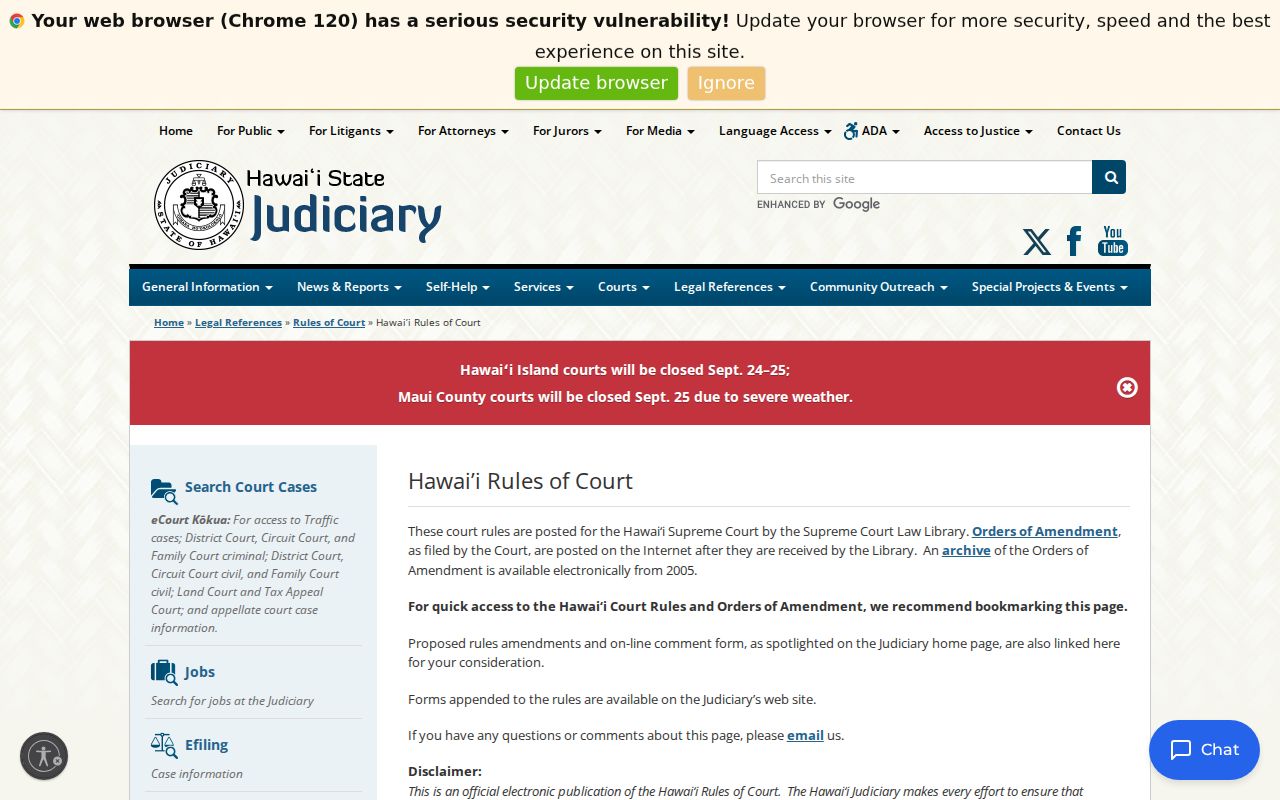
Rule 3 handles the request and the probable-cause finding in a Hawaiʻi criminal case. Rule 9 takes over after that. It covers what a warrant must contain and how it gets executed. Before a Hawaiʻi warrant issues, the judge applies the Hawaiʻi rule; the Hawaiʻi Rules of Penal Procedure govern that court step, and service follows issuance under its own rules. The rules explain how a Hawaiʻi warrant is issued. The case record tracks what happened next.
What a Hawaiʻi Arrest Warrant Contains
Hawaiʻi Rule 9 spells out what an arrest warrant has to say. It must identify the defendant or describe the person clearly enough to recognize. It must state the offense, show the date and the issuing court, and command that the person be arrested and brought back before that court. Bail and any other arrest conditions appear on the face of the warrant when the judge sets them. The judge's signature goes on it too. Hawaiʻi publishes no public arrest-warrant result schema and no standard warrant-number format you can safely assume from a printed page. When you hold a signed warrant order, read the issuing court and the return command first. Then note any bail or other conditions. A number printed on a warrant case document may just be a case identifier, not a statewide warrant number. The paper alone cannot tell you the warrant is still active; confirm later service, recall, or other updates with the court. Read the instrument together with its state case record. The issuing Hawaiʻi court, the offense, and the return command show what the order does in that particular Hawaiʻi matter. A Hawaiʻi case number from a notice helps the Hawaiʻi clerk find the file fast.
| Person | Name or description sufficient to identify the defendant |
|---|---|
| Offense | Offense stated in the warrant |
| Issuing court | Hawaiʻi court that issued the order and receives the return |
| Issue date | Date shown on the warrant |
| Bail and conditions | Amount and any other arrest conditions when set |
| Judge | Signature of the issuing judge |
Hawaiʻi Arrest Warrants and Probable Cause
A judge signs off on probable cause before an arrest warrant issues in Hawaiʻi. That step is judicial. It is not a promise that the supporting papers go public. HRPP Rule 3 governs the warrant request, and Rule 9 sets what the warrant must contain and how it is executed. Even so, Hawaiʻi case pages can stay quiet. A complaint, application, declaration, or affidavit may hold facts that never reach a public docket view. So a filed charge can show on a Hawaiʻi case page while the earlier request stays hidden. A blank screen proves little. Ask the issuing court, not the search box. Counsel can also explain which papers exist. The Hawaiʻi Court Records Rules control public access, confidentiality, and protected personal information. A request under HRS Chapter 92F, the state's Uniform Information Practices Act, works differently. It does not override court-record limits or unlock a sealed warrant. The relevant court's docket is the route to whatever documents are available. Hawaiʻi dockets show filed events, but access rules can hold back supporting materials. In a Hawaiʻi case, ask about the specific filing rather than inferring from a search screen. A Hawaiʻi court-records search shows accessible filings, not every Hawaiʻi warrant document.
How Arrest Warrants Are Served
In Hawaiʻi, law-enforcement officers execute arrest warrants under the rules that govern them. Two kinds of agencies share the work. The statewide DLE Sheriff Division executes arrest warrants and serves other court process. County police departments handle local warrant service too. Hawaiʻi does not have a separate elected sheriff's office for each of its five counties. The Judiciary's eBench Warrants system sits apart from DLE. It admits only approved agency users, and its landing page does not name every serving agency. One warrant may therefore involve DLE and county officers in distinct roles. HRPP Rule 9 drives the mechanics. It allows execution anywhere in Hawaiʻi, without unnecessary delay. The arrested person must be brought before a judge promptly. The officer returns the warrant after service. The officer need not hold the paper at the moment of arrest, though the rule addresses showing it when asked. What follows depends on the order and the circumstances. Bail, release conditions, and the first court appearance all flow from those. No public webpage can predict how a particular warrant will be served. Statewide reach does not put one officer on every case. Assignment and circumstances decide whether DLE or county police act. An officer serving in one Hawaiʻi circuit returns process to the court identified in the order.
Hawaiʻi Arrest Warrants and DLE Service
Hawaiʻi's Department of Law Enforcement runs the Sheriff Division as its statewide arm for court process. The division serves arrest warrants, writs, and other court documents. It also guards courthouses and state facilities. Transporting people between islands falls to it as well, along with work beside county and federal partners. Its job is service and enforcement, not searches. DLE offers no public warrant lookup and does not run the Judiciary's eBench system. Act 278, Session Laws of Hawaiʻi 2022, created the department. The transfer took effect January 1, 2024. County police agencies in Hawaiʻi stayed separate. For a personal case, call the court division that issued the warrant first. A general agency line is not a warrant-status hotline. Hawaiʻi warrant status stays tied to the issuing case. Ask that court to separate docket status from what an agency reports about service. Hawaiʻi law on statewide execution appears in HRS §604-13. Contact details for DLE sections sit on the official DLE Sheriff Division page. Treat those numbers as service contacts, not a universal public status line. DLE coordinates certain statewide service, yet Hawaiʻi police departments remain their own agencies. The county directory points to police contacts, not a sheriff for each Hawaiʻi county. That distinction helps Hawaiʻi residents find the right office fast.
Arrest Warrant vs Summons vs Bench Warrant
Hawaiʻi courts work with three different papers, and confusing them leads nowhere. An arrest warrant authorizes custody. It comes out of a probable-cause process. A summons does something gentler: it tells a Hawaiʻi defendant to appear and answer a complaint. It does not authorize an arrest by itself. The bench warrant sits in its own category. It is the court's response to a missed required appearance or another failure to comply in a pending matter. More on Hawaiʻi bench warrants walks through that separate court process. Sequence matters here too. Under Rule 9, a judge may issue a warrant after a defendant fails to appear in response to a summons. The warrant then returns the person to the issuing court. The charge and the case record stay distinct from the paperwork used to bring someone before the judge. So the actual paper controls. In a Hawaiʻi case, match the document to the issuing Hawaiʻi court before asking what process applies. A Hawaiʻi docket shows which one the court entered. Read it that way. Treat a summons, a probable-cause arrest warrant, and a Hawaiʻi bench warrant as three documents with different legal origins and effects, because the response depends on the order the court actually signed.
| Feature | Arrest Warrant | Summons | Bench Warrant |
|---|---|---|---|
| What it does | Authorizes arrest of the person named or described | Directs the person to appear | Directs arrest and return after a court nonappearance or noncompliance |
| Basis | Judge finds probable cause under Rule 3 | Issued through the applicable case process | Failure to appear or comply in a pending matter |
| Court role | Judge issues the order | Court directs an appearance | Judge issues under the rule for the case |
| Next step | Confirm case, bail, and counsel options | Attend as directed | Confirm status and ask the issuing court about recall or appearance |
District and Circuit Arrest Warrants in Hawaiʻi
Hawaiʻi runs one statewide Judiciary organized into four active circuits. District Court handles traffic, ordinance, and misdemeanor matters within its authority, and it conducts felony preliminary proceedings. Circuit Court is the general-jurisdiction trial court, including felony cases. Family Court is a division within the Judiciary for family and juvenile matters, and HRS §571-84 restricts access to juvenile case records. The court that issued the warrant depends on the case and its stage. It is not simply the county name. The official Hawaiʻi Circuit Courts page describes the Judiciary's general-jurisdiction court level across the state's circuit structure.
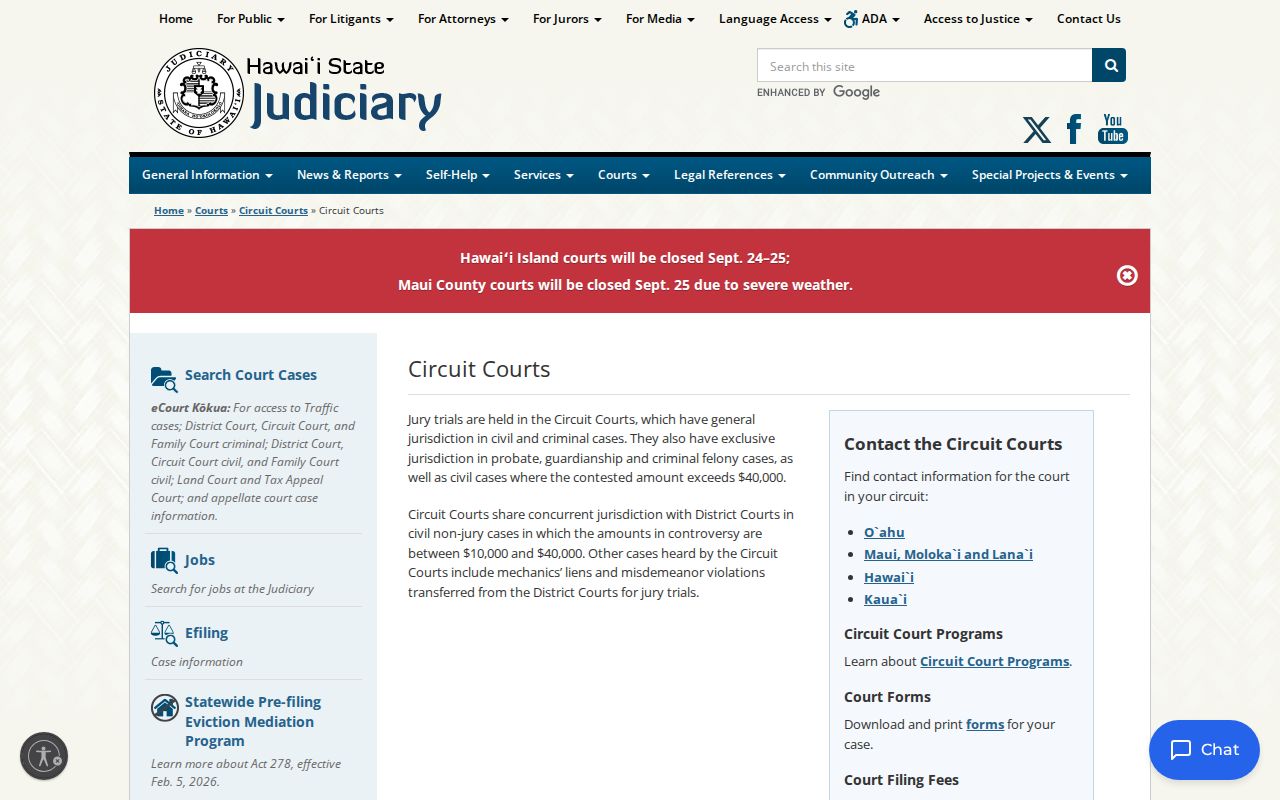
Which clerk can confirm a warrant's status depends on where the case sits. Hawaiʻi's statewide structure assigns matters by jurisdiction and case type. Case and warrant routing follows the circuit and division with authority over the particular Hawaiʻi proceeding. A Hawaiʻi arrest warrant may originate in District Court. A later felony case may then proceed in Circuit Court under Hawaiʻi's jurisdictional structure. So start with location and division, then call that clerk.
What to Do If There Is a Warrant for You
Think a Hawaiʻi arrest warrant concerns you or a family member? Start by identifying the case and court. A notice, a traffic citation, or a public case docket often gives you both. Then call the issuing clerk. Ask whether the warrant is active, what bail or conditions apply, and what warrant appearance or motion is required. Talk to counsel where possible before arranging a surrender or court visit. The Hawaiʻi county directory routes the warrant case location to its circuit and local court contacts. Do not assume time has expired an arrest warrant. An online Hawaiʻi search with no result does not mean the warrant was recalled. Keep a copy of any recall motion or court order. Confirm the clerk has entered the warrant outcome in the docket. If the matter sits outside Hawaiʻi or may be federal, ask the relevant court which system holds the case. For a Hawaiʻi resident, an online result is only a starting point. The Hawaiʻi clerk can confirm docket events. Counsel can explain how Hawaiʻi procedure applies to your circumstances. Use the county directory to find local court contacts for the case location. Give the Hawaiʻi clerk enough detail to locate the case. Then ask for the Hawaiʻi court's next instruction.
Important: Do not treat a walk-in as a way to avoid arrest or secure immediate release. Confirm the court's instructions and seek counsel about surrender, bail, and the case's next step.
Hawaiʻi State and Federal Arrest Warrants
A Hawaiʻi state-court warrant and a federal arrest warrant live in separate case systems. Federal Rule of Criminal Procedure 4 governs issuance in a federal case. The U.S. Marshals Service in Hawaiʻi describes its service and task-force role. A state warrant channel cannot confirm the status of federal process. Neither can the state's eCourt Kōkua case search. The U.S. District Court for the District of Hawaiʻi provides its own case docket route. Sealed federal warrant matters may not appear in a public docket search at all. A Hawaiʻi state case stays distinct from a federal case even when both arise on the islands. Federal process is not reflected in the Hawaiʻi Judiciary's state portal. A Hawaiʻi public search cannot resolve it. A Hawaiʻi state-court search is not a federal warrant index. Contact the court handling the District of Hawaiʻi case directly. The federal court's CM/ECF and PACER court listing identifies the District of Hawaiʻi docket access point. That court-selection page contains no case result. Federal docket access begins there, at the court's official PACER listing.
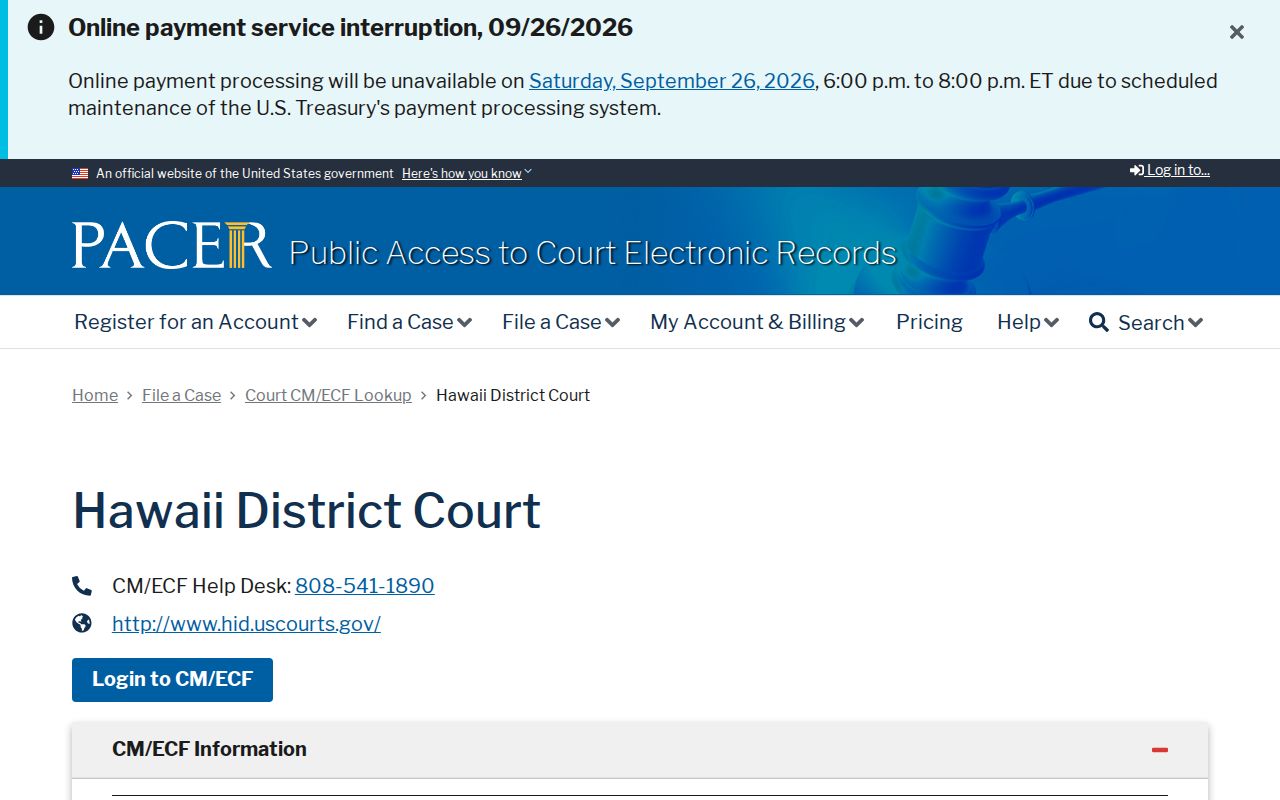
The District of Hawaiʻi Clerk's Office contact page lists the federal contacts. That route sits apart from Hawaiʻi state-court case records.
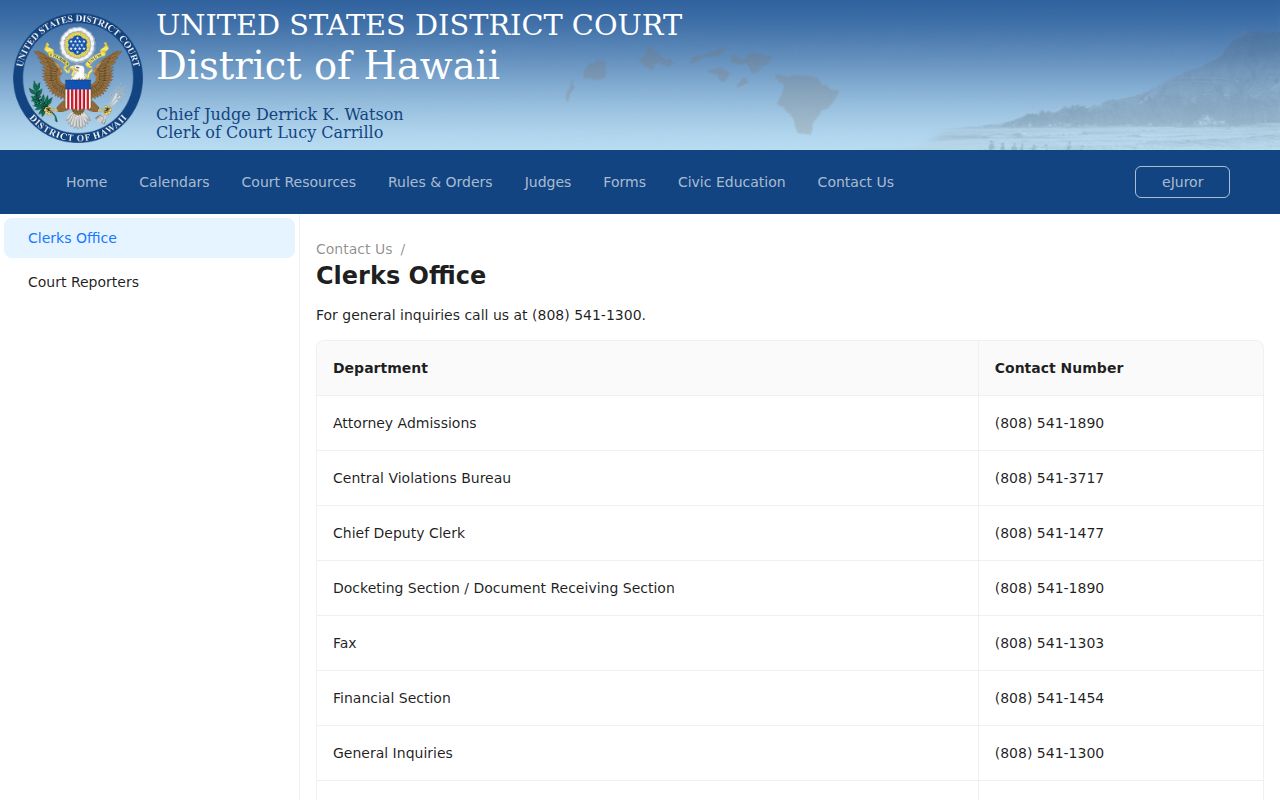
Use the federal court identified in the case. Treat Hawaiʻi state warrant information as short of a complete federal check.